With the Export Market Development Grant (EMDG) Round 4 opening date approaching, Australian businesses have a key opportunity to receive financial support for expanding internationally. Recent changes to the program however, have introduced new criteria and a more competitive application process.
In this guide, we’ll walk through essential steps and strategies to help strengthen your EMDG application, giving your business the best possible chance to secure funding.
This article will help you discover:
- What is EMDG and recent changes
- EMDG program objectives
- Overview of tiers and eligibility
- Eligible products and services
- Crafting a clear and strategic marketing plan
- Timing and application deadlines
What is EMDG?
The Export Market Development Grant (EMDG) is a government initiative designed to help Australian businesses grow by supporting the costs associated with marketing their products and services to international markets. The grants provide funding to help offset these expenses, making it easier for businesses to expand globally.
What’s changed?
EMDG Round 4 introduces some significant changes:
- Larger grants are now available, making the potential impact even greater, but for less businesses.
- New eligibility criteria have been introduced, focusing on businesses with a higher likelihood of export success.
- Applications will be assessed first-come, first-served, increasing the need for early preparation.
- Increased focus on diversification encourages businesses to target new markets and expand their global reach.
Program objectives
The EMDG program aims to help Australian small and medium-sized enterprises (SMEs) and representative bodies promote their products and services in global markets.
The primary objectives are to:
- Encourage export growth: Assist Australian businesses in starting or expanding their international presence.
- Support market diversification: Encourage businesses to enter new markets to reduce reliance on a single export region.
- Increase export skills: Develop export-related marketing and promotional capabilities within businesses.
Understanding the EMDG tiers
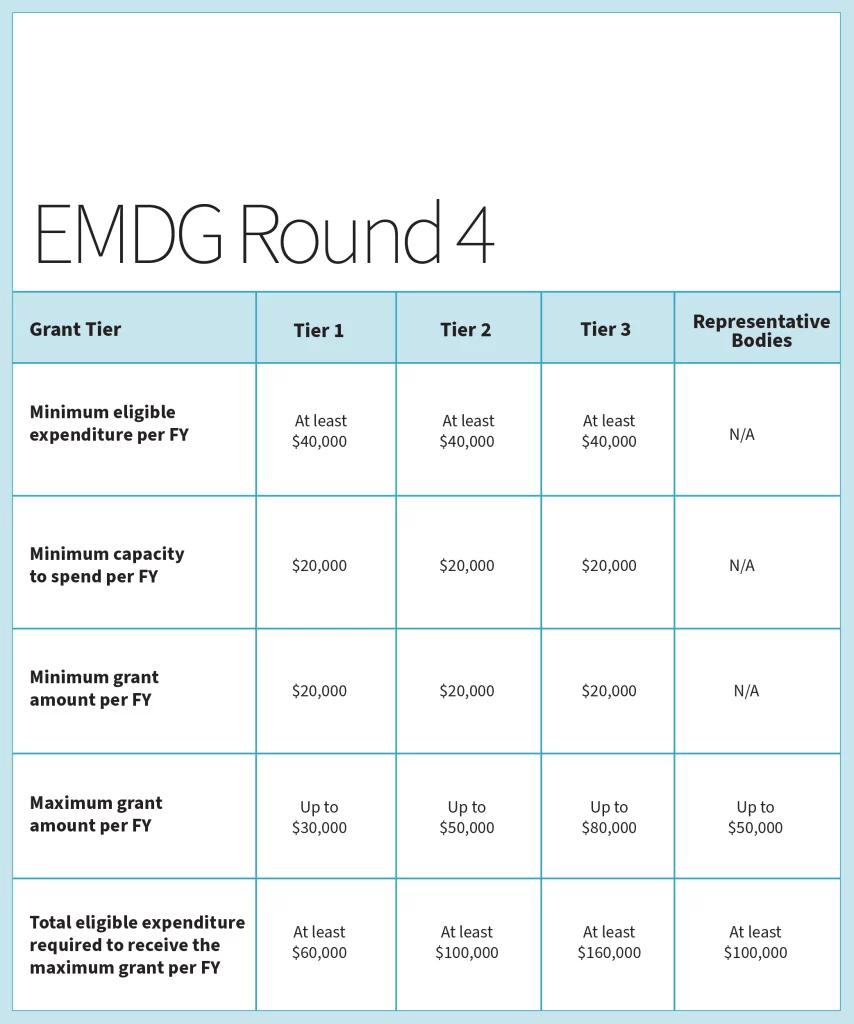
In Round 4, the EMDG program is divided into three tiers, each designed for businesses at different stages of their export journey:
- Tier 1 – Ready to export
This tier supports businesses at the beginning of their export journey. To be eligible, businesses must complete recognised export training or pass Austrade’s Export Readiness Test. - Tier 2 – Expanding in existing markets
For businesses already exporting, Tier 2 helps expand their efforts within existing international markets by offering funding for enhanced marketing and promotional activities. - Tier 3 – Expanding to new markets
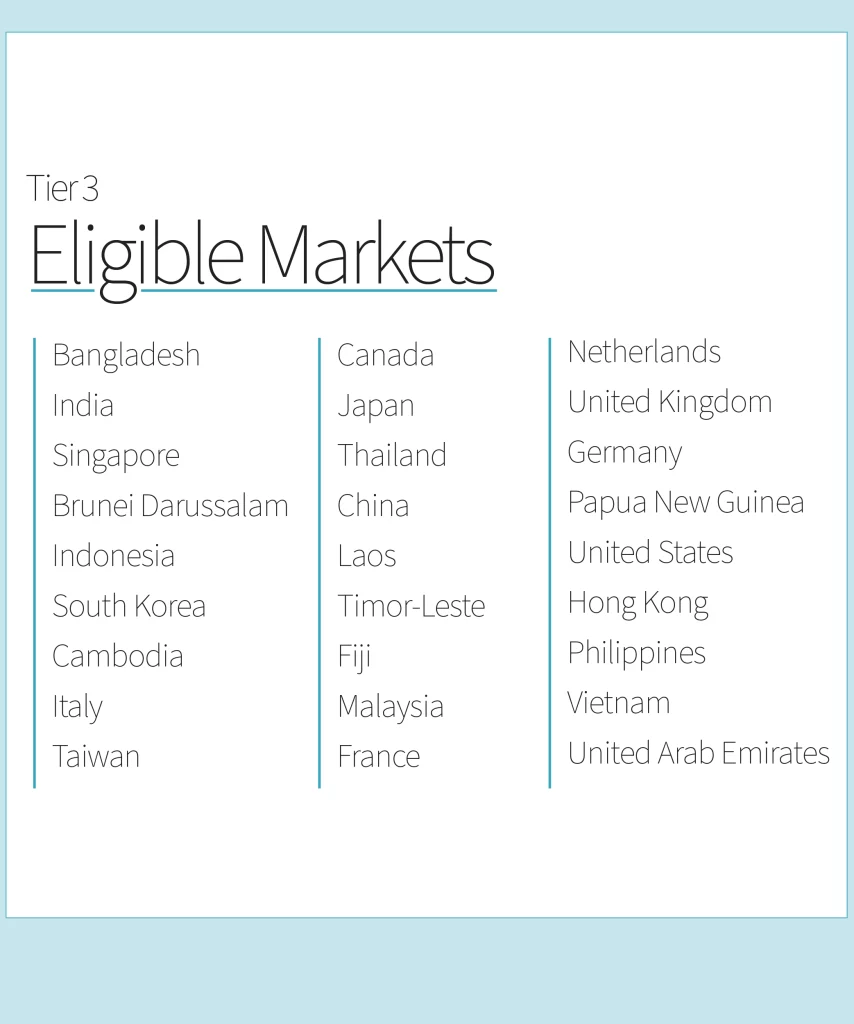
If your business is diversifying into new global markets, Tier 3 helps support the expansion through strategic promotional efforts if you are considering the following countries:
- Representative Bodies
Representative bodies that support SMEs in export activities can also apply for funding. This tier focuses on organisations offering export training or launching promotional campaigns that benefit member businesses.
FundFindrs Tip: Selecting the correct tier is critical as businesses can only apply for one tier in round 4 of the EMDG program which runs from 1st July 2025 to 30th June 2027. Each tier has specific eligibility criteria and focuses on different stages of exporting. FundFindrs can assist you in selecting the right tier based on your business’s export status and growth goals.
Eligible products and service
To qualify for the EMDG, your business must be promoting products or services that are substantially of Australian origin.
Eligible products and services include:
- Goods: Manufactured or produced in Australia, either fully or with significant local transformation.
- Services: Tourism services for international visitors or other services (outside of tourism) provided to foreign markets that have a significant portion of their value added in Australia.
- Events: Trade shows or similar events held in Australia focused on promoting Australian products or services to international customers. For online events, they must be hosted by an Australian individual or business with a majority of attendees being international buyers.
- Intellectual Property & Know-How: Intellectual property, including trademarks and patents developed in Australia, as well as technical know-how originating from Australian research or work.
- Software: Software that is the result of substantial Australian-based development.
FundFindrs Tip: If you’re unsure whether your products or services meet the criteria, our team can help you evaluate your eligibility and ensure your application is aligned with EMDG guidelines.
Craft a clear and strategic plan to market
Your plan to market is arguably the most critical part of your EMDG application. This is where you demonstrate exactly how you will use the grant to promote your business internationally considering marketing and promotional activities. Round 4 guidelines stipulate that your plan to market must be high-quality and specific to your business and the tier you are applying for.
To craft a compelling marketing plan, focus on the following:
- Define your target markets: Identify the key international markets you plan to enter or expand into. Be specific about the market potential and why you’ve chosen these regions. Include market research and insights to back up your strategy.
- Outline your promotional activities: Detail how you plan to use the grant funding. Will you be attending international trade shows, investing in digital marketing campaigns, or hiring local representatives? Clearly define your tactics, and ensure they are tailored to the markets you are targeting.
- Demonstrate incremental investment: EMDG can not be used for business as usual activity. Your plan to market needs to demonstrate how you will use the funds to make incremental investment in marketing activities.
- Set measurable goals: Explain what success looks like for your export activities. This could be increasing sales in a particular market by a certain percentage, growing brand awareness, or securing a set number of new clients. Be clear about your goals and how you will measure progress.
- Show the ROI: Austrade wants to see that your marketing and promotional efforts will generate real business outcomes. Make sure your plan demonstrates how the activities will lead to tangible growth in international sales by providing a return on investment forecast.
FundFindrs Tip: Crafting a detailed marketing plan can be complex, but FundFindrs is here to help. Our expert team can guide you through developing a strong, strategic marketing plan that aligns with EMDG criteria and maximises your chances of success.
Prepare early: timing is everything
Applications for Round 4 will be assessed on a first-come, first-served basis, which means preparing early is essential. With demand expected to be high and no guarantee of funding for every business applying, starting your application as soon as possible can significantly improve your chances of securing funding.
Important Dates:
- November 6, 2024: Applications open at 10am for representative bodies
- November 12, 2024: Applications open at 10am for Tier 1, Tier 2, and Tier 3
FundFindrs Tip: At FundFindrs, we specialise in helping businesses prepare early to avoid last-minute application rushes. Get in touch today for a FREE consultation to ensure your EMDG application is ready to submit on time.
Maximise your EMDG application
The EMDG program offers significant financial support for businesses looking to grow their international footprint. However, with the introduction of new eligibility criteria and a competitive, first-come, first-served process, preparation is critical.
At FundFindrs, we are dedicated to helping you navigate the complexities of the EMDG application process. Our expert team is ready to assist you every step of the way — from tier selection to crafting a winning market plan.
Get in touch with FundFindrs today, and let’s get your EMDG application ready to take or expand your business globally. If EMDG isn’t the right fit for your business, don’t worry — talk to us about other grants that might be available to help your business grow.