female-led businesses Archives - FundFindrs

Leading Together: Jen & Kate on Two Years as General Managers of FundFindrs

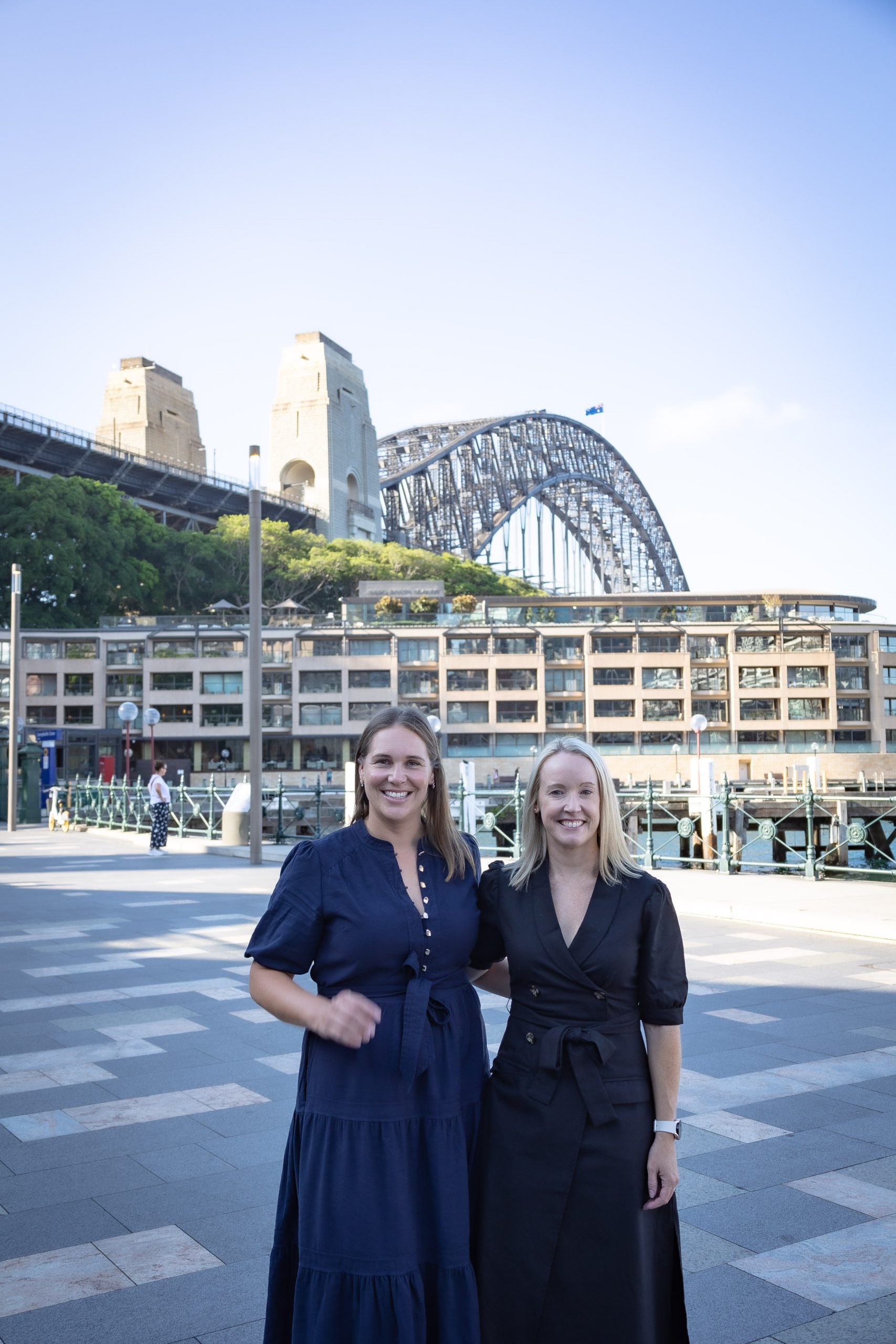
Jen Manuel and Kate Downing share the role of General Manager of FundFindrs, a role in which they celebrate their two-year anniversary. Here they reflect on their partnership and what they’ve achieved together. 


  1. A unique partnership
  2. Driving growth with agility
  3. Making impact for clients
  4. A team built to thrive
  5. Looking ahead


1. A unique partnership 

Their story began seven years ago, when both were looking for flexible work arrangements after having children. With broad and differing business backgrounds, it was a chance meeting over coffee that revealed a shared work ethic, ambition, and complementary skills. Their first experience of a job share was as Marketing Managers, which later evolved into senior roles where they built strategies and led teams. They continued to work together across a range of industries, moving from managing existing functions to creating new ones, establishing departments, setting direction, and driving change on the way. What started as a job share became a leadership style — two strategic minds tackling every business challenge. 

Then two years ago, Jen and Kate stepped into the shared role as General Manager of FundFindrs. Since then, the duo’s successful leadership partnership has strengthened and helped build a business that continues to thrive, adapt and deliver meaningful impact for Australian businesses. 

“Collaboration is second nature,” Jen explains. “One of us has an idea and the other springboards it further. It gives us built-in validation and allows us to see challenges from multiple angles.” 

Kate adds: “Our team gets the benefit of two different perspectives, and clients get leaders who truly understand the diversity of industries they work in.” 


2. Driving growth with agility 

In their time, FundFindrs has welcomed new clients and expanded its team. For Jen and Kate, success has come from a clear people strategy; hiring individuals who not only understand business but are passionate about contributing to others’ success. 

They also credit their growth to a “fail fast” mentality. “We test, we learn, and we pivot,” says Kate. “Sometimes weekly. The funding landscape changes quickly, and our agility helps us adapt.” 

“Real-time financial insight and forecasting underpin everything we do and the decisions we make. We’ve always been data-driven,” Jen says. This combination of strong people, constant feedback loops, and data at the core is what lets FundFindrs move fast without losing precision. 


3. Making impact for clients 

At its heart, FundFindrs helps businesses access growth funding while retaining control. Jen notes: “Often clients don’t realise what funding they’re eligible for. When they see what’s possible, the excitement builds and all of a sudden they’re planning new projects and seeing bigger opportunities.” 

Unlike consultants who appear once a year to process an R&D claim, FundFindrs takes a deeper, ongoing role. “Although we do support clients with R&D Tax Incentive, we do much more than that; we get to know businesses, their goals and innovation plans. This is what FundFindrs is all about and why we love what we do,” Kate explains. “And knowing their business helps us unlock a range funding strategies, award submissions, and greater opportunities for support and growth, more broadly than R&DTI submissions,” adds Jen. 


4. A team built to thrive 

Jen and Kate are upfront about the realities of startup life. “It requires a level of comfort with uncertainty, which we’re transparent about throughout the hiring process, because you need to thrive in an environment where things change quickly,” says Jen. “We’ve come from different corporate backgrounds, and we too have needed to adjust and adapt. We love being able to make quick decisions and give the team ownership to drive the business forward as well,” adds Kate. 

Onboarding and empowerment are key. “We want people set up to succeed from day one, and given the space to use their strengths,” says Jen, and Kate adds “We make sure we give people the best chance to succeed. It’s so important and getting it right means you see people flourish here, and that’s what makes FundFindrs special.” 

Technology plays a big part in this too. “We invest heavily in giving the team the right tools and training,” says Jen. “Exploring AI is a good example, not because it’s novel, but because it amplifies what our team can do, helping them work smarter and produce better outcomes for clients.” 


5. Looking ahead  

As for the future, both are excited about continuing to expand services and evolve with client needs. “We want to be a real partner that businesses come to for support, to grow their business, and who want to succeed together. We will cater to the needs of our clients and expand our services accordingly.” Kate says. 

The Female Founders Co Investment Fund: Everything You Need to Know

Last reviewed: July 28, 2026


Securing initial capital remains a significant hurdle for female-led organisations in Australia. 

Recent reporting from the State of Australia’s Startup Funding reinforced this disparity, showing that from a $4 billion funding pool, only 2% was allocated to businesses founded entirely by women, 15% went to ventures with at least one female founder, while a staggering 70% was directed toward male-founded startups. 

This is why initiatives like the Female Founders Co Investment fund provided by the Queensland Government have been introduced to reduce the support gap that female innovators often face. 

In this article, we break down the Co Investment structure and what you need to know before applying. We also cover some features that can help increase the strength of your application. 


      1. What is the Female Founders Co Investment Fund?
      2. Program funding available
      3. How can I secure the Female Founders Fund
      4. Co-investment breakdown
      5. Timings and deadlines
      6. Uses of funding
      7. Expenditure not covered by funding
      8. What is the closing date for applications?
      9. Application status


Key takeaways 


  • The Female Founders Co-Investment Fund provides $50,000 to $200,000 in matched funding for eligible Queensland businesses raising early-stage investment capital.
  • Businesses must be female-founded and female-led, including at least 51% female ownership and female executive leadership.
  • The Female Founders Co-Investment Fund is available to innovation-driven businesses developing or commercialising innovative products or services.
  • Applicants must be headquartered in Queensland, have an active ABN and GST registration, and employ no more than 50 full-time equivalent staff.
  • Businesses that have previously raised more than $500,000 in capital are not eligible for the Female Founders Co-Investment Fund.
  • Private investment is required, as the fund operates through a co-investment model rather than a standalone grant.


1. What is the Female Founders Co Investment Fund? 

The Female Founders Co-Investment Fund was launched to support female-led, innovation-driven businesses in Queensland that are raising early-stage capital. The goal is to increase the volume and quality of private investment flowing to women-founded businesses with high-growth potential. 

The program offers matched grant funding to support qualifying capital raises. 


2. Program funding available 

The Female Founders Co-Investment Fund QLD is open to businesses looking at securing early investment. This grant has a threshold of $50,000 minimum to a maximum grant of $200,000 (1:3 matched with private investment) 


3. How can I secure the Female Founders Fund 

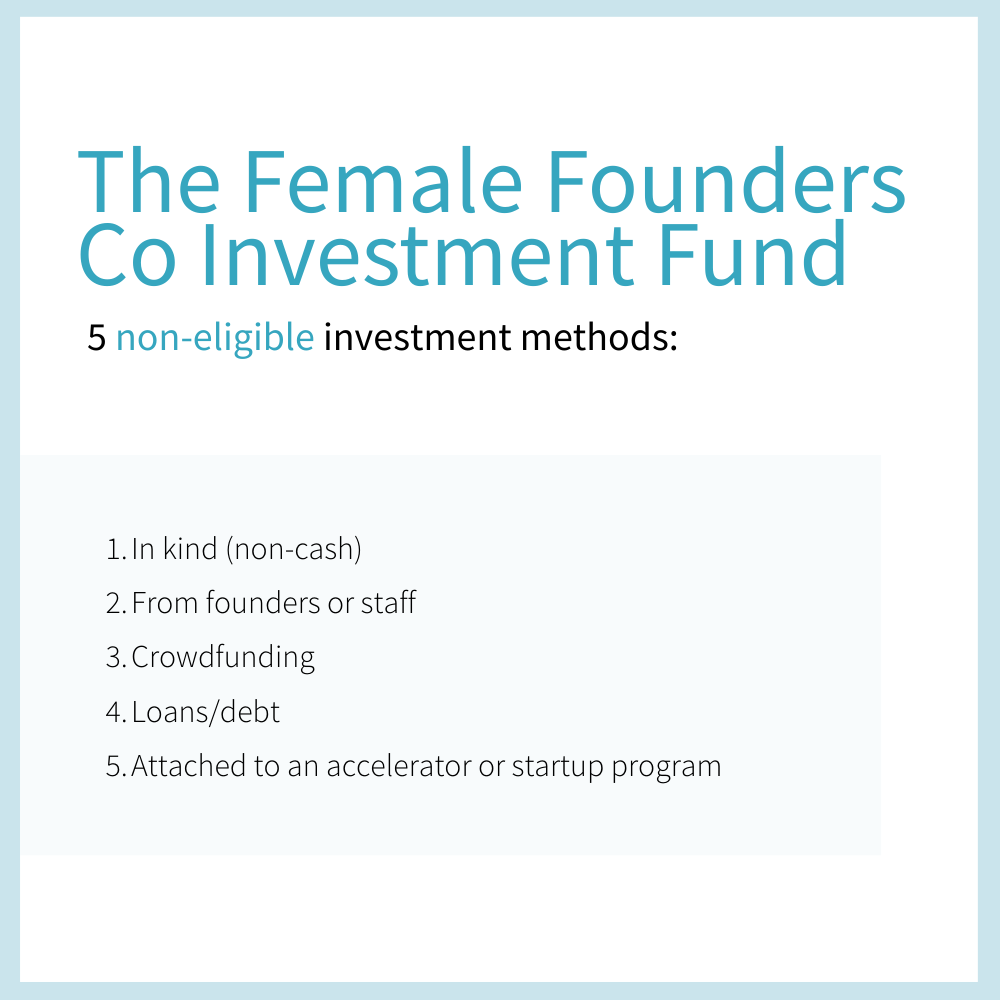
  1. Must be headquartered in Queensland, with an active ABN and GST registration 
  2. Be a female-founded and female-led business for at least six months prior to applying: 
    • Majority female-owned: at least 51% of shares held by a woman or women
    • Female-led: at least one woman holds a primary executive role (e.g. CEO, CFO, CTO, CSO)
    • If shares are held via a trust, the business must still demonstrate compliance
  3. Be an innovation-driven enterprise (IDE) developing or commercialising innovative products or services 
  4. Have no more than 50 full-time equivalent employees 
  5. Not be a subsidiary of a larger group 
  6. Not have previously raised more than $500,000 in capital.


Book a FREE consultation to find out if your business matches the application criteria.


4. Co-investment breakdown  

This fund adopts an alternative approach in government support by utilising a co-investment method. Rather than providing individual grants, the program is designed to work together with private investors.  

For every $3 raised from eligible external investors, the fund contributes $1 as a grant, up to a maximum of $200,000 (excluding GST), paid over a 12-month period. 


What does this mean? 

  Here’s an example of how the 1:3 ratio works: 

    • A startup led by a female founder secures $180,000 from eligible investors. 
    • The government fund will contribute $60,000 as a grant. 

That means the total funds available to the startup become: 

$180,000 (investors) + $60,000 (grant) = $240,000 


To qualify for a minimum grant of $50,000, the organisation must secure at least $150,000 in external investment. 

If this grant isn’t the one for you, check out our Top 5 Queensland Government Business Grants.


5. Timings and deadlines  

An important aspect of the Female Founders Co-Investment Fund is timing. Businesses that are provisionally approved for funding do not receive the grant immediately.  

Instead, they are given 180 calendar days (six months) to secure the required private investment from eligible investors. 


Application timeline: 

    • Apply: Your application is assessed. 
    • If provisionally approved: That means the fund likes your application in principle, but you don’t get the money right away. 
    • Clock starts: From the date of your provisional approval, you have 180 calendar days to secure your external private investment.  
    • If you succeed: Once you show proof of investment, the grant is confirmed and paid out. 
    • Unsuccessful: If you can’t secure the private investment in that timeframe, the grant funding offer lapses.


6. Uses of funding 

In the application, the use of funds must be specified. The grant must be used for projects to grow the business, such as:  

    • R&D 
    • marketing and advertising  
    • acquiring new customers 
    • expanding to new markets  
    • scaling production 
    • salary expenditure – subject to terms  


7. Expenditure not covered by funding  

    • construction of physical or IT infrastructure  
    • employee benefits 
    • seminar fees 
    • travel costs  
    • legal or licences fees 
    • general business operating costs 


8. What is the closing date for applications? 

The Program will remain open until all funds have been allocated. 

Applicants who meet the eligibility criteria will be assessed competitively and notified of the outcome by email within approximately 6-10 weeks. 

Not sure where to start, find out how a grant expert can help you:  What Does a Grant Consultant Do? | Comprehensive Guide by FundFindrs 


9. Application status 

Great news, submissions are now OPEN. Make sure your application is ready; remember you only have 6 months to secure funding once approved.  

If your business is currently raising or preparing to, this program can significantly boost your capital support. The FundFindrs team of experts can help you prepare the funding strategy, validate eligibility, and align your investment narrative to meet requirements.  

Maybe the Female Founders Co Investment Fund is not suitable to you, check out alternative supports available to Women In Business.


While self-assessment is possible, it’s easy to miss opportunities or make simple mistakes that will result in your application been rejected. Working with FundFindrs can help increase your chances of approval and ensure you optimise your time attracting external investment.   

Book a FREE consultation with our team today. 


Who’s Winning Grants – and What They’re Doing Differently

Last reviewed: July 28, 2026


Every year, billions of dollars in grants are distributed across Australia – from federal and state programs to corporate, philanthropic, and regional funding. Yet for every successful application, there are hundreds (and sometimes thousands) that don’t make it through. 

So, who’s actually winning grants right now? And what are they doing that others aren’t? 

I’ve seen thousands of applications, from community organisations and social enterprises to startups and larger businesses, and clear patterns emerge. The organisations and founders who consistently win funding don’t just write better applications. They think strategically, align with funding priorities, and treat grants as part of a long-term growth strategy.

Here’s what sets them apart.


  1. They build before they apply
  2. They align their mission with the funder’s agenda
  3. They measure what matters
  4. They use technology to stay ahead
  5. They think long-term 


Key takeaways 


  • Successful grant applicants prepare before opportunities open, with clear project plans, budgets, evidence and measurable outcomes already in place.
  • Winning grants requires strong alignment with funder priorities, demonstrating how a project supports outcomes such as innovation, sustainability, regional growth or job creation.
  • Funders assess outcomes, not just activities. Strong applications explain the impact a project will deliver and how success will be measured.
  • Funding-ready organisations maintain core application materials, including organisation profiles, financial information, project plans and capability statements.
  • Government priorities influence future funding opportunities, making it important to monitor policy, budget and industry trends.
  • Grant success is part of a long-term strategy, not a one-off application process.


1. They build before they apply 

The most successful applicants start long before they hit “submit.” They’re not waiting for the perfect opportunity to appear; they’re already funding-ready. 

That means: 

  • Clear goals and measurable outcomes 
  • A well-defined project plan 
  • A realistic budget 
  • Evidence of capability and delivery
     

When a grant opens, they can quickly align their work to the funder’s criteria. Meanwhile, less-prepared applicants scramble to retrofit their ideas into opportunities that don’t quite fit. 

Grant’d tip: Build a funding readiness kit — your go-to folder with your organisation profile, ABN/financials, capability statement, project plan, and team bios. It’ll save you hours later. 


2. They align their mission with the funder’s agenda

Winning grants means more than good writing. It’s about strategic alignment. 

Funders have agendas. Their job is to distribute money that achieves specific outcomes, like innovation, sustainabilitydigital transformation, inclusion, or regional growth.

Your job is to show how your project contributes to those outcomes. 

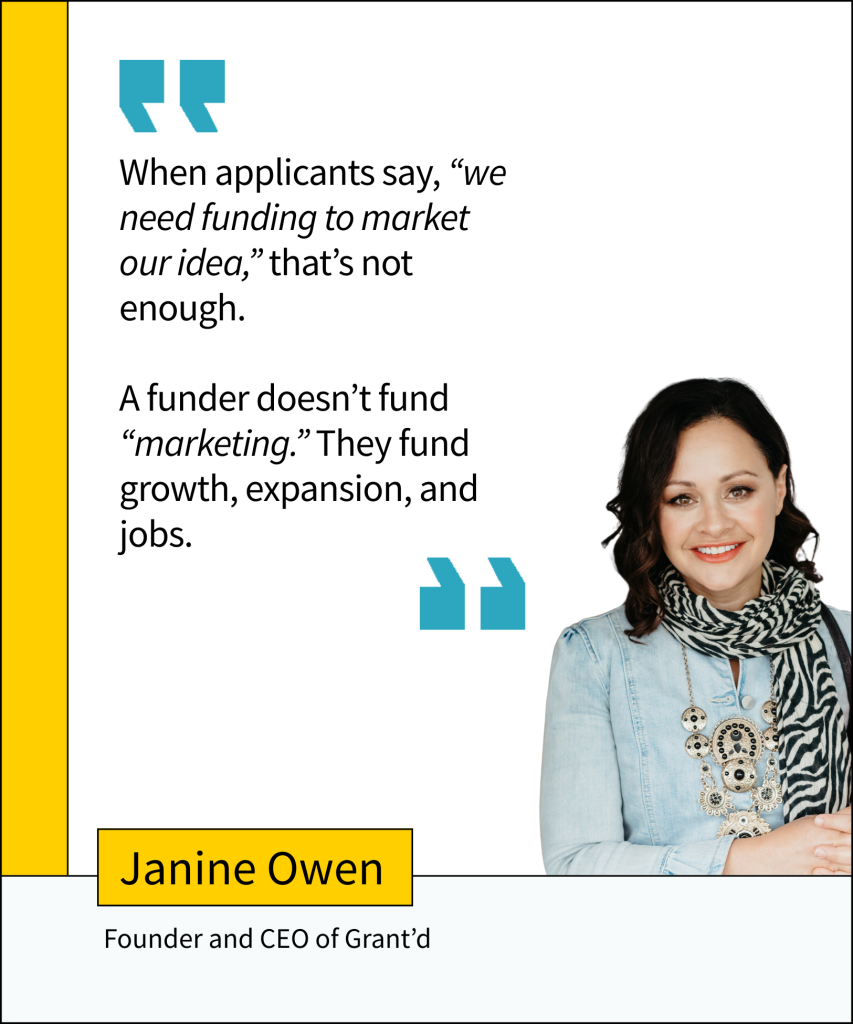
When applicants say, “we need funding to market our idea,” that’s not enough. A funder doesn’t fund “marketing.” They fund growth, expansion, and jobs. 

For example: 

  • “Marketing” → “Driving export growth and new market entry” 
  • “Software development” → “Digitising operations and enhancing industry productivity” 
  • “Community workshops” → “Building local resilience and creating pathways to employment”
     

Winners speak the language of impact, not just activity. 

Grant’d tip: Every funding opportunity is shaped by policy. If you follow the Federal Budget, state strategies, and ministerial priorities, you’ll see where funding is headed 6–12 months before programs launch. 


Janine Owen Founder and CEO of Grant'd RDTI quote


3. They measure what matters

The best applications go beyond outputs (“we’ll deliver 10 workshops”) to outcomes (“we’ll train 100 people and help 30 into new jobs”). 

Funders want to see tangible social or economic value, and confidence that you can track and report on it. 

The most competitive organisations integrate data collection and impact reporting from the start. They can easily quantify their outcomes when applying or acquitting.


4. They use technology to stay ahead

 Successful applicants don’t rely on luck or late-night research; they use systems and tools to keep their funding pipeline organised and opportunities visible.

Whether it’s tracking upcoming programs, setting alerts for new grants, or managing documentation in one central place, they make technology work for them.   

This gives them more time to focus on what really matters: refining their strategy, building strong partnerships, and demonstrating impact.  

Grant’d tip: Explore tools that help you centralise your grant search and management. The goal isn’t just efficiency — it’s freeing up time to focus on the strategic work that drives funding success. 


5. They think long-term

Winning one grant is great. But the real magic happens when organisations create a funding pipeline, planning 6–12 months ahead and aligning multiple grants across growth stages. 

That’s how small projects become sustainable programs and startups scale faster without relying entirely on investors.


Need help building your funding strategy?

Chat with our team to explore how we can help you plan, prepare, and position your next grant application.


Takeaway

The businesses winning grants aren’t chasing everything; they’re choosing strategically. They understand policy, stay prepared, and align their projects with the outcomes funders care about most. 

And the result? Less chasing, more winning.


About Grant’d  

Our mission is to make that process easier – giving you the AI tools, insights, and community to find, manage, and win grants with confidence.  

Learn more at grantd.com.au


From Mistakes to Mastery: Learning from Grant Application Errors

Last reviewed: July 28, 2026


If you’ve ever submitted a grant and received the dreaded “unsuccessful” email, you’re not alone. Every organisation that applies for funding experiences rejection at some point, even the best. 

The difference between those who give up and those who grow is what they do next. 

At Grant’d, we believe unsuccessful applications aren’t failures – they’re feedback. Every “no” is a data point you can learn from. 

Here’s how to turn mistakes into mastery.

  1. Most grant rejections are fixable
  2. Treat feedback as data, not emotion
  3. Build reusable system
  4. Remember: timing is everything
  5. Learn from others 


Key takeaways 


  • Most grant rejections are fixable, with common issues including poor alignment, unclear outcomes, weak evidence and unrealistic budgets.
  • Grant feedback should be treated as a learning opportunity, helping applicants identify gaps and improve future submissions.
  • Tracking lessons from previous applications can strengthen future results, making it easier to identify recurring weaknesses and opportunities for improvement.
  • Reusable grant content can improve efficiency, including organisation overviews, impact statements, team biographies and budget templates.
  • Timing matters. A strong project may be unsuccessful if it does not align with current funding priorities or program objectives.
  • Learning from other applicants and industry networks can improve grant readiness, helping businesses refine their approach and increase future funding success.


1. Most grant rejections are fixable 

When we unpack unsuccessful applications, the reasons are usually predictable, and solvable.

Common Mistake How to Fix It
Poor alignment Ensure your project directly advances the funder’s stated goals.
Vague outcomes Define clear deliverables and measurable impact.
Budget mismatches Keep figures realistic and consistent with the project scope.
Weak evidence Add supporting data, testimonials, or case studies.
Timing Sometimes, it’s just not the right round or focus – try again later.


Each of these can be addressed with better preparation and reflection. 


2. Treat feedback as data, not emotion

It’s easy to take rejection personally, but funders are assessing fit, not worth. When you receive feedback, analyses it systematically:
 

  • What keywords or themes do they use in the rejection? 
  • Which parts of your proposal might not have aligned? 
  • Were you clear about your outcomes and beneficiaries?
     

Document it. Build a “grant lessons” folder where you record what you learn from each submission. Over time, you’ll start to see patterns and strengths.


3. Build reusable system

Grant applications can be repetitive, but that’s an opportunity. Create templates for your: 

  • Organisation overview 
  • Impact statement 
  • Key team bios 
  • Budget structure
     

Then adapt them per grant. Tools like Grant’d help centralise this, so you can reuse winning language and track performance metrics over time.


Want expert eyes on your next grant or R&DTI submission? 
FundFindrs’ experts help you refine, align, and get funding-ready.


4. Remember: timing is everything


Sometimes, your project is excellent, but the funding cycle just doesn’t match. Government priorities shift annually. If your project wasn’t funded this round, it might be perfect next quarter when new programs open. 

The key is to stay funding-ready, your project brief, budget, and outcomes clear, so you can move fast when the right opportunity appears. 


5. Learn from others

Don’t learn in isolation. Join communities like Grant’d and FundFindrs to find other founders and learn from their experiences what have worked, what didn’t, and what changed their success rates. 

You’ll learn that every successful applicant has a history of rejection and every rejection made their next win stronger.

Takeaway 

Rejection isn’t the end of your funding journey; it’s part of the process. Every “no” gives you insight, clarity, and direction for the next “yes.”


About Grant’d  

Grant’d helps you build repeatable success, with smart matching, application tracking, and insights that evolve with you.  

 Learn more at grantd.com.au