Last reviewed: July 17, 2026
The Australian business landscape is experiencing a significant surge in entrepreneurial activity, with 97% of all businesses classified as small businesses according to the Australian Small Business and Family Enterprise Ombudsman (ASBFEO). This shift reflects a broader trend where innovation, adaptability, and strategic funding are essential for business growth regardless of size or industry.
As we move into a new financial year (FY27), small to medium-sized enterprises (SMEs) must proactively secure funding, embrace AI, and adapt to emerging market trends to stay competitive. Whether you’re launching a startup, scaling an existing business, or investing in digital transformation, understanding available resources is crucial.
This guide provides expert insights into the most relevant business strategies, funding opportunities, and industry trends shaping the next financial year. From R&D Tax Incentive (R&DTI) and business grants to AI-driven efficiency and industry-specific funding, we’ve compiled the most critical tips to help your business succeed in the next 12 months.
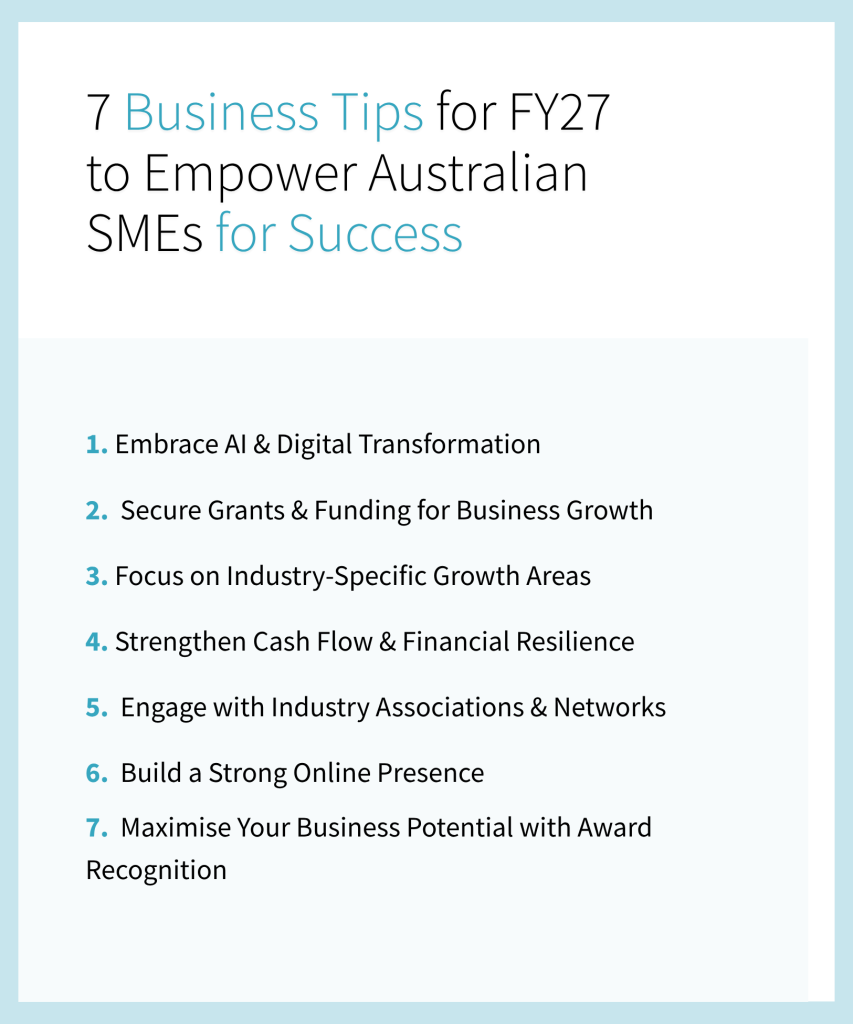
- Embrace AI & Digital Transformation
- Secure Grants & Funding for Business Growth
- Focus on Industry-Specific Growth Areas
- Strengthen Cash Flow & Financial Resilience
- Engage with Industry Associations & Networks
- Build a Strong Online Presence
- Maximise Your Business Potential with Award Recognition
Key takeaways
- AI and automation are becoming essential growth drivers, helping SMEs improve productivity, efficiency and decision-making.
- Grants, funding programs and the R&D Tax Incentive can support business growth, innovation and digital transformation initiatives.
- Industry-specific opportunities continue to emerge, making it important to align growth plans with market and funding trends.
- Strong cash flow and financial resilience remain critical for sustainable business growth.
- Industry networks and associations can provide valuable connections, insights and opportunities for SMEs.
- A strong online presence and market visibility help businesses remain competitive in a rapidly changing environment.
- Awards and recognition can strengthen credibility, improve brand awareness and support business growth.
1. Embrace AI & Digital Transformation
Let’s start with the trend topic of the moment: AI and automation are becoming essential growth drivers for SMEs, and businesses that embrace them will gain a competitive edge.
According to the Tech Council of Australia, AI is expected to be the defining technology trend in 2026, with business leaders increasingly viewing it as a key driver of operational efficiency and cost savings. Additionally, the Australian Parliament has highlighted AI and automated decision-making as crucial for boosting productivity and economic growth.
FundFindrs Tip | SMEs can benefit from AI & automation by using:
How can Australian SMEs use AI and automation to grow in FY27?
- AI-powered analytics tools to help businesses optimise cash flow, predict market trends, and manage risk.
- Automation tools to reduce administrative burden, freeing up time for strategic growth.
- AI-driven chatbots and virtual assistants to enhance customer service while reducing operational costs.
- Cybersecurity automation to protects businesses from increasing digital threats.
Did you know? There are several government-backed grants and incentives for businesses investing in AI, automation, and digital transformation, making now the perfect time to explore those funding options.
2. Secure Grants & Funding for Business Growth
What grants and funding programs are available for Australian SMEs in FY27?
There are thousands of grants available for SMEs across various industries in Australia. Whether you’re in technology, manufacturing, renewable energy, or agriculture, securing the right funding can accelerate business growth.
FundFindrs Tip | Examples of Grants and Tax Offset Programs to watch:
- NSW Minimum Viable Product (MVP) Grant
The NSW Government’s MVP Grant supports startups and innovative SMEs who aim to commercialise new and highly innovative products. Eligible businesses can receive up to $50,000 until available funding is exhausted.
- Research & Development Tax Incentive (R&DTI)
The R&D Tax Incentive remains one of the most valuable funding sources for Australian SMEs, offering a tax offset of up to 43.5% for eligible R&D expenses. This program is crucial for businesses investing in innovation, product development, and scientific advancements.
With thousands of funding programs available, working with specialists like FundFindrs ensures you access the most relevant grants for your industry.
3. Focus on Industry-Specific Growth Areas
Aligning your business with emerging industries receiving strong government investment can improve funding eligibility and open new growth opportunities in the upcoming financial year.
FundFindrs Tip | Key sectors to drive business success in FY27:
Which industries are receiving the most government funding in Australia in FY27?
- Agricultural Innovation & AgTech – AI-driven farm management, precision agriculture, and climate-resilient technologies are attracting investment.
- Health & Aged Care Services – According to the Australian Treasury’s 2023 Intergenerational Report, the share of Australians aged 65 and over is projected to reach 23% by 2062–63. This will generate a demand for aged care innovations, assistive technologies, and healthcare services is rapidly increasing.
- Construction & Infrastructure – Government-backed infrastructure projects are creating funding opportunities for smart-projects, energy-efficient buildings and sustainable solutions.
- Renewable Energy & Sustainability – Businesses investing in clean energy solutions carbon capture, and circular economy innovations will benefit from ongoing grants, such as the Advancing Renewables Program (ARENA).
- Cybersecurity & Digital Security – With increasing cyber threats, SMEs investing in cybersecurity solutions will gain access to funding opportunities.
4. Strengthen Cash Flow & Financial Resilience
How can SMEs strengthen cash flow and financial resilience in FY27?
In an economic climate marked by rising interest rates, inflation, and market volatility, SMEs must take a proactive approach to financial resilience. A strong financial position not only ensures business stability but also improves eligibility for grants and investment.
Cash flow stability isn’t just about survival — it’s about creating the capacity for growth, innovation, and long-term sustainability.
FundFindrs Tip | Top strategies for cash flow stability and building financial resilience:
- Leverage tax incentives like the R&D Tax Incentive to offset costs.
- Use AI-driven financial forecasting tools to predict revenue fluctuations.
- Diversify revenue streams by expanding product lines, targeting new markets, or introducing subscription-based services to enhance financial security.
- Secure working capital funding to ensure smooth operations during economic downturns.
- Review and optimise business expenses to enhance profitability.
- Adjust pricing strategies in response to market changes and inflation while maintaining customer loyalty.
Not sure if you’re eligible for the R&D Tax Incentive?
Our free Blueprint breaks it down with an eligibility checklist, examples, and expert tips from the FundFindrs team.
5. Engage with Industry Associations & Networks
Industry associations and business networks play a critical role in connecting SMEs with funding opportunities, mentorship, and strategic partnerships. Many awards and funding programs give preference to businesses that demonstrate industry involvement, making these connections highly valuable. Beyond financial benefits, being part of a strong business network provides insights into industry trends, regulatory updates, and collaboration opportunities.
As FY27 brings increased competition for grants and funding, along with new government-backed initiatives, SMEs with strong industry ties will have a strategic advantage. Engaging in these networks can open access to exclusive funding streams, provide early insights into regulatory changes, and position businesses as key players in their sectors, making them more attractive to investors and grant providers.
FundFindrs Tip | How to maximise industry connections:
- Join local and national business chambers, trade associations, and industry-specific groups to stay informed about sector-specific grants and emerging opportunities.
- Participate in networking events, grant information sessions, and workshops to build relationships with funding bodies, potential partners, and advisors.
- Collaborate with industry bodies and advocacy groups to gain credibility and improve your business’s chances of securing funding.
- Engage with accelerator programs and innovation hubs, which often provide grant access, investor connections, and growth support for high-potential businesses.
- Seek mentorship from experienced industry leaders, who can guide you on grant applications, business development, and long-term strategic planning.
6. Build a Strong Online Presence
A robust digital presence is no longer optional: it’s essential for securing grants, attracting investors, and growing your customer base. According to Google, 88% of consumers research businesses online and read reviews before making purchasing decisions.
Now more than ever, a well-optimised digital footprint can improve discoverability, enhance brand authority, and position your business for greater success in a competitive landscape.
FundFindrs Tip | Key steps to strengthen your online presence:
- Optimise your website with clear messaging, products and services offering, and case studies.
- Leverage social media to share success stories, customer’s feedback, and industry insights.
- Implement SEO strategies to ensure your business is discoverable by your target audience.
- Ask your clients to leave testimonials and reviews of their experience with you service or product.
7. Maximise Your Business Potential with Award Recognition
Being recognised with a business award is more than just a badge of honour: it’s a strategic tool for accelerating your business. Winning an award can significantly boost business visibility, leading to increased partnerships, customer trust, and revenue growth. If you’re serious about expanding in this new financial year, FundFindrs can help position your business for awards recognition and success.
FundFindrs Tip | How we can help you build winning awards submissions:
- Identifying the best awards for your industry and achievements.
- Crafting compelling, high-impact submissions that increase success rates.
- Managing the entire application process, so you don’t have to worry about deadlines or paperwork.
How FundFindrs Can Support Your Business Growth
At FundFindrs, we’re here to support your business through every stage of growth. From securing grants and maximising your R&D Tax Incentive claim to managing award submissions and identifying the right funding opportunities, our expert team has you covered. Explore our full range of services designed to help you grow, innovate, and strengthen your financial position in FY27 and beyond.