Grant Writing Consultation Archives - FundFindrs

From Proposal to Funding: How a Grant Writing Consultant Can Support Your Business

A simplified guide to the grant application process and the role of a grant writing consultant

Applying for grants can be a challenging task for business owners. If you’ve written a grant application (or attempted to), you know how hard and tedious it can become. However, many people are still unaware of what a grant consultant does.


When someone lures you in with the promise of free funding for your organisation, it sounds appealing (and it’s often true!), but reaching that point involves several steps. These steps require a substantial investment of time, resources, and know-how.


Many businesses have given up on their grant applications because the process is so time-consuming. That’s where grant consultants and writers can add value and help propel your business forward.


Grant writing specialists make the process easier by assisting businesses throughout the entire application journey. They offer crucial insights, direction, experience and expertise to improve the chances of a successful outcome.


What Does a Grant Writing Consultant Do?

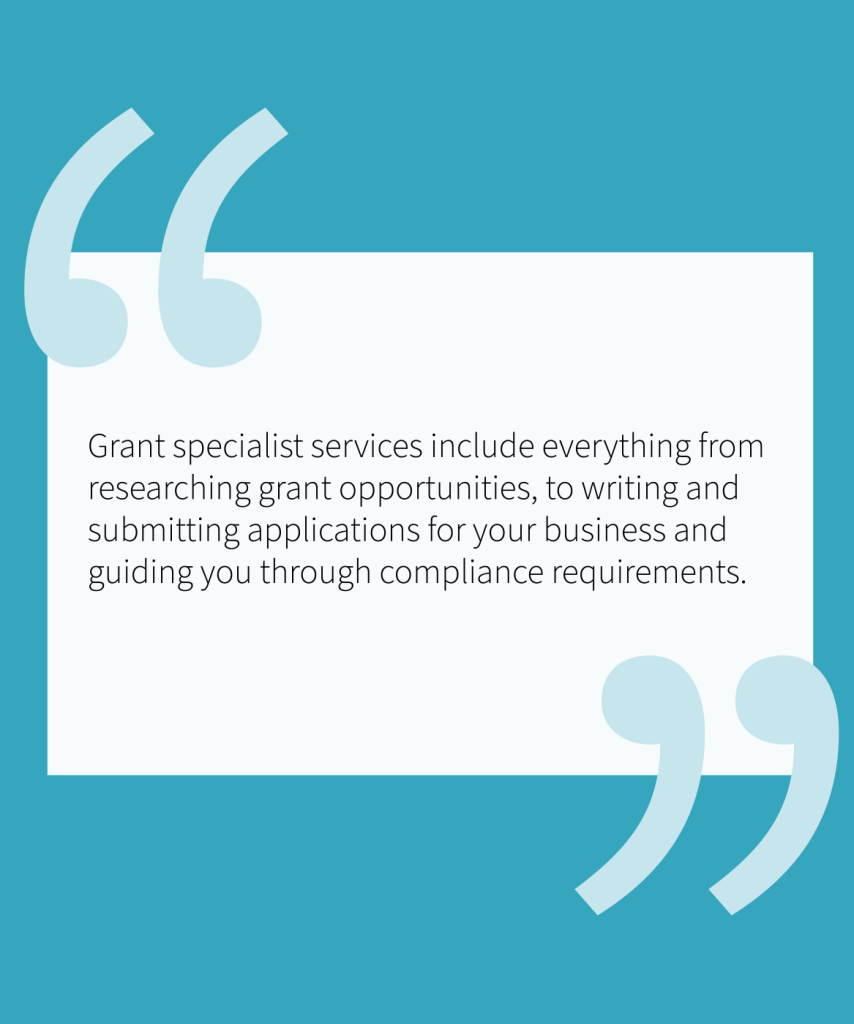
Whether you decide to hire your own employee or contact a fund finding agency, grant specialist services include everything from researching grant opportunities, to writing and submitting applications for your business and guiding you through compliance requirements.


Often, when engaging an external consultant, the agreement typically covers all aspects of the process, including preparation, research, writing, and application.


At first, it might appear that the tasks are simple and easy to manage yourself. However, within these tasks there are multiple smaller steps such as participating in debriefs with foundations on funding guidelines or rejected proposals and researching through a database that lists thousands of possible funding opportunities and selecting the ones that are best for you.
 

What-Does-a-Grant-Consultant-Do-Comprehensive-Guide-by-FundFindrs-quote


Here is a basic blueprint of how a grant writing agency supports businesses through the process of finding suitable fundings:


1 – Investigating Relevant Grants for Your Business

It all begins with pinpointing grants that match your business objectives and aligns with your planned programs and initiatives. It’s crucial to comprehend the eligibility criteria, submission deadlines, and specific prerequisites for each grant opportunity.

This first step helps ensure that the applied efforts are directed towards the most appropriate funding sources with the best chance for success.


2 – Collecting All Necessary Documentation

Before starting the application process, the grants specialist will orient you on the necessary steps and gather all required documents. These may include business registration details, financial statements, tax returns, and business plans.

Additionally, they will collect strategic documents, proof of eligibility such as industry certifications or licenses, and any other documentation required by the grant guidelines. This ensures that all the requirements are thoroughly covered.


3 – Help Organising Financial Statements

Providing clear and detailed financial statements, such as profit and loss statements, balance sheets, and cash flow statements, is mandatory.

A focused grant consultant can guide your business in demonstrating strong financial health, which enhances your credibility and strengthens your application.


4 – Formulating a Detailed Business Plan

An expert grant services company can also assist you in developing a comprehensive business plan that outlines your company’s goals, strategies, and the specific project or initiative for which you need funding.

Tailored support can help you clearly describe how the grant will contribute to your business’s growth, innovation, or sustainability and also how it will impact the broader community or economy. A grant consultant can even support you with the design of projects to target specific grant programs.


5 – Drafting an In-Depth Project Proposal

Most grants require a project proposal, and a grant consultant can assist you in preparing a thorough and well-organised document. This document should include project objectives and goals, methodology and approach, timeline and key milestones, a detailed budget highlighting the use of grant funds, and measurable outcomes and anticipated impact.


6 – Making Sure you Meet the Eligibility Requirements

Carefully examining and addressing each eligibility requirement specified in the grant guidelines is part of a grant writer’s role. Clearly illustrating how your business meets these criteria is crucial, as overlooking any requirement could lead to your application being rejected. Having specialist support increases your chances of success.


7 – Developing a Compelling Story

Why should your business be selected over your competitor to win a grant? Crafting a compelling narrative that uses clear and concise language to tell your business’s story, highlighting its unique features and contributions, is fundamental.

A specialist writer has the expertise to create a proposal that clearly expresses the necessity for funding and the positive impact it will have on your business and the wider community.

Navigating the grant application process can be complex and time-consuming. Investing in grant consultants is a strategic decision that can yield significant returns for your business. By leveraging their expertise, insights, and networks, you gain a competitive edge in securing grants.

Grant companies can manage your federal, state, local government grant application as well as community or foundation grant applications, ensuring they are thorough yet concise to meet the highly competitive nature of the process, allowing you to concentrate on running and expanding your business.


How to Choose a Grant Writing Consultant

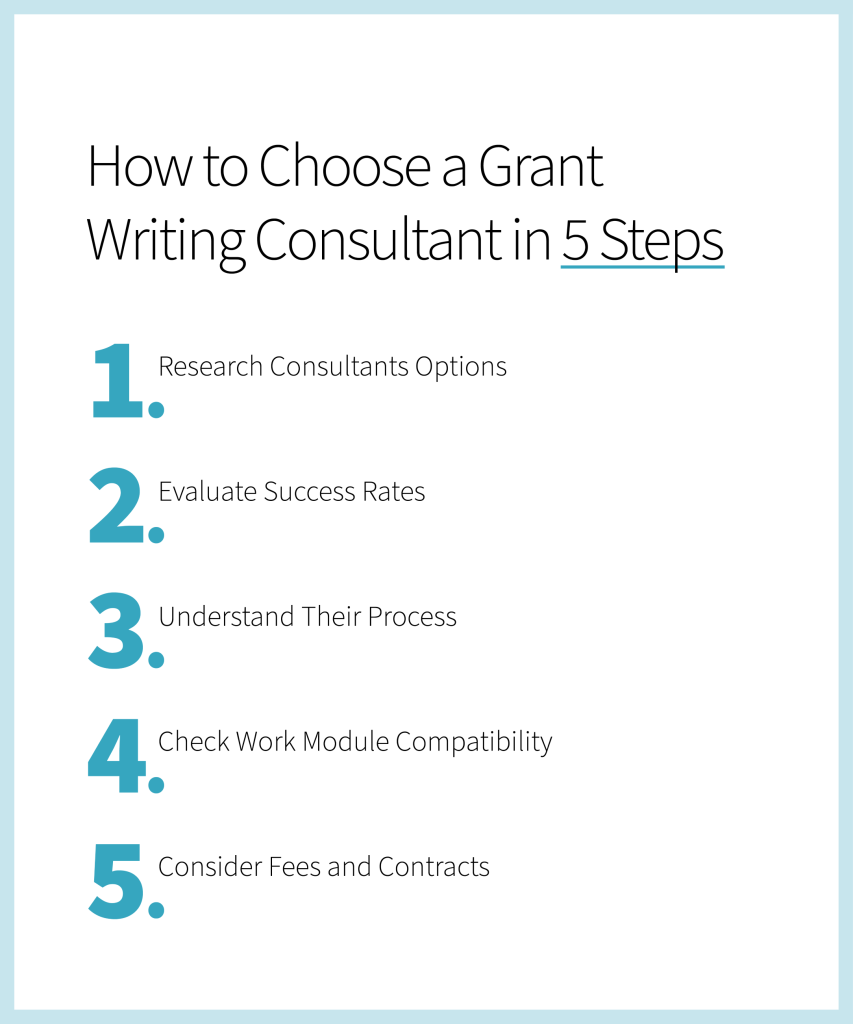
Choosing a grant writing consultant is crucial for securing funding for your project. Here’s a 5-steps streamlined approach to help you to make the best choice while searching for an expert support:


  1. Research Consultants: Look for experienced consultants with relevant qualifications and positive client testimonials.
  2. Evaluate Success Rates: Inquire about their track record in securing similar grants and the total funding they have obtained.
  3. Understand Their Process: Discuss their approach to gathering information, developing proposals, and ensuring timely submission.
  4. Check Compatibility: Ensure their communication style aligns with your expectations and that they understand your project.
  5. Consider Fees and Contracts: Understand their fee structure and review contract terms for clarity on deliverables and payment.
 

how-to-choose-a-Grant-Consultant-FundFindrs


Compare the options based on these criteria and choose the one you feel most confident in before making your decision.


How FundFindrs Can Streamline Applications and Save Time for Your Business

At FundFindrs, we simplify the grant application process into three manageable steps.


Step 1 | Tailored Consultation

We start by meeting with you to understand your business operations, goals, and aspirations. This allows us to create a bespoke proposal that aligns with your objectives.


Step 2 | Expert Application Management

Our experienced team takes charge of gathering the necessary documentation and crafting your application meticulously. We provide guidance on financial documentation and collaborate closely with you at every step.


Step 3 | Seamless Grant Approval

Upon successful approval, you receive your grant funding directly, with our support throughout the entire journey.


The FundFindrs edge includes a no-win, no-fee model on selected applications, saving you time by managing every aspect of the application. Our specialists in R&D Tax Incentives help you secure up to 43.% of your R&D expenses, and we partner closely with clients for long-term growth, managing all grants and awards applications.

Contact our team today to book a free consultation and discover how we can help your business secure the funding it needs.

 

Book your FREE 30 minute starter chat with us

How Winning a Grant Helped Me Step Off the Hamster Wheel and Build Grant’d

Running a business — especially as a solo founder — can sometimes feel like you’re sprinting on a treadmill that never stops. You’re juggling everything: clients, cash flow, product, people (or no people), planning, and that ever-present question — “How do I grow this without breaking myself in the process?”


I’ve spent years helping charities and organisations raise millions through grants and fundraising. Over $100 million, in fact. But when it came to funding my own vision — when it was my name on the application and my business that needed the next step — I felt just as stuck as so many others do. I was deep in the grind. Delivering services to stay afloat. Doing all the things — workshops, webinars, strategy sessions — just to keep revenue coming in. But I knew I was only building sideways. Not up. Not forward. And that’s when something shifted.


In 2023, I received a grant through the Boosting Female Founders Program. Now, let me say this clearly: it wasn’t a miracle, or magic. I still had to apply, still had to articulate the vision, still had to show the numbers. But when that approval came through, something changed. It gave me space. Not just time — although yes, that too — but mental space. Permission to pause the scramble, step off the hamster wheel, and finally double down on building what I knew the sector desperately needed: a smarter, simpler way to help businesses, charities, and communities find and win grants.


The grant that changed everything

That funding was a turning point. It wasn’t just cash in the bank — it was validation. It was momentum. It allowed me to hire support, invest in the product, and shift from being a consultant in motion to a founder with a vision. It let me take Grant’d — something I’d been dreaming about for years — and turn it into a product. Not just another database. Not just a directory. But a proper, intelligent platform designed to guide people through the entire grants journey: from discovery and deadlines, to writing and reporting.


Until that point, I’d always been “doing the work” — writing, applying, researching, advising — manually. And I knew I wasn’t the only one. I knew that thousands of others were wasting hours trying to search for grants late at night, rewriting the same applications, second-guessing every eligibility criteria, and often missing out on funding they were perfectly suited for. But I couldn’t fix the system while I was still stuck inside it. That grant gave me the runway to build something better. Something scalable. Something for everyone who didn’t have time, money or a consultant on speed dial. It gave me the freedom to move from survival mode to strategy — and honestly, that’s the difference between staying stuck and stepping into something game-changing.


But let’s be honest — Applying was still nerve-wracking

Even with all my experience in fundraising, when it came to applying for a grant for my own business, I had the same nerves so many others do. The fear of getting it wrong. The overwhelm of documentation. The “Who am I to apply for this?” mindset. But it was also incredibly clarifying.


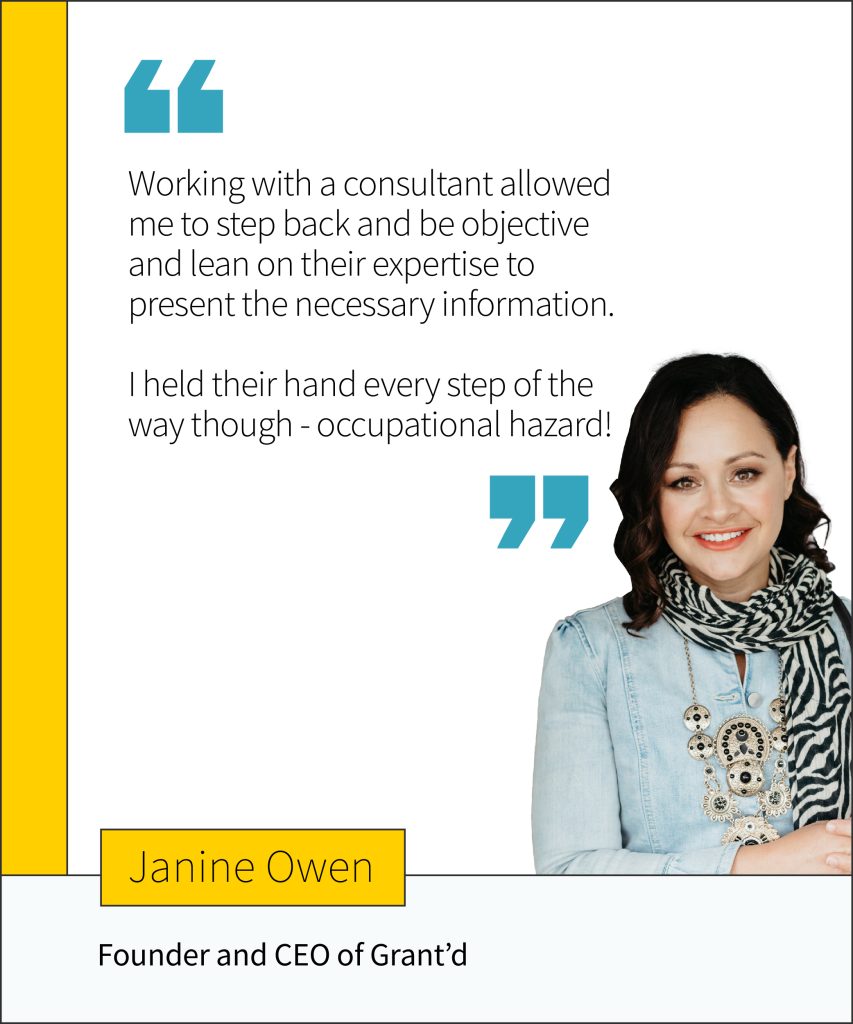
It forced me to get really clear about what I was building, why it mattered, and where I was heading. It made me step outside the day-to-day and think bigger. And most importantly, it made me believe — in myself, in the idea, and in the impact we could have. That clarity? It’s been one of the most valuable outcomes of all. Plus, I got support from experts (yep, other grant specialists). You see I knew what I was good at, but I also knew my limitations. Presenting my own work felt so overwhelming and I was so close to it I lost perspective. Working with a consultant allowed me to step back and be objective and lean on their expertise to present the necessary information. I held their hand every step of the way though – occupational hazard!


FundFindrs - Janine Owens (Grant'd) Quote


Why grants are more than just funding

I talk to so many people who say they don’t apply for grants because they think they’re too small, too early, too busy, or just “not ready.” But here’s the truth: grants aren’t just about the money. They’re about momentum.


They’re about carving out time to build properly. About showing funders — and yourself — that you have something worth investing in. Grants can give you space, clarity, validation, and structure. They make you stop and articulate your purpose, your strategy, your plan. They make you ready — not just for that application, but for what comes next. And if you get one? It can absolutely change the game.


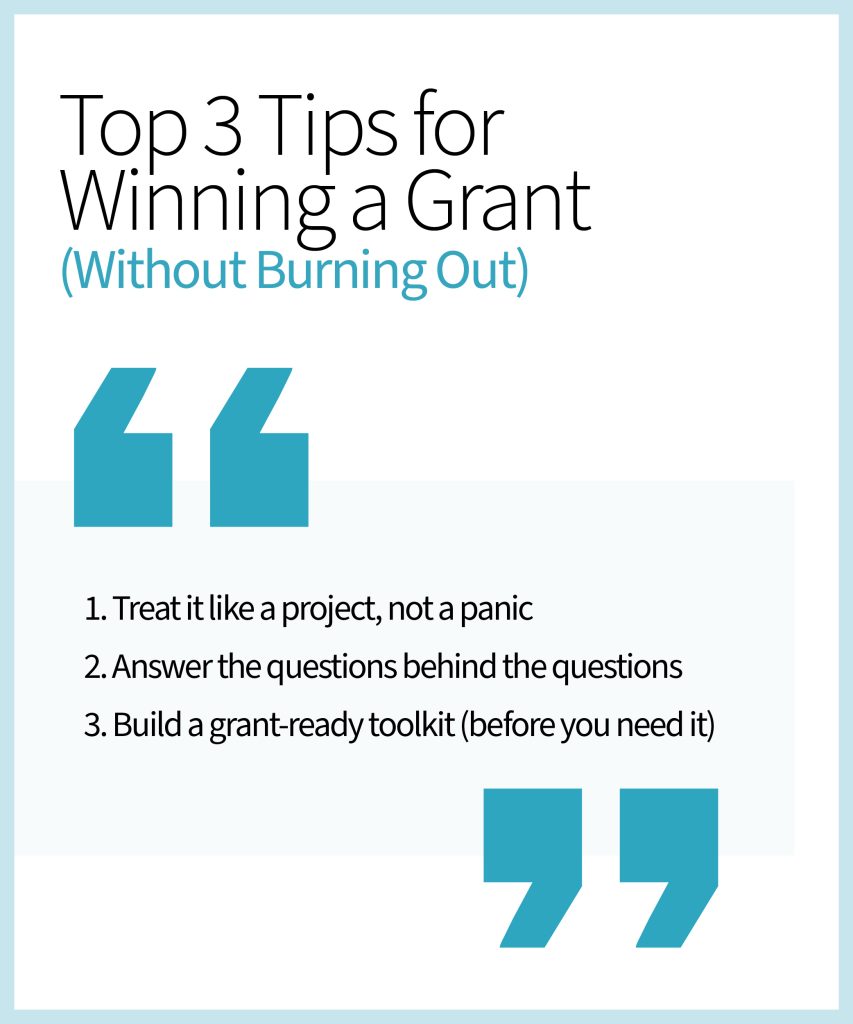
My top 3 tips for winning a grant (without burning out)

1. Treat it like a project, not a panic

Too many people scramble to write their applications the night before it’s due. I get it — we’re all busy. But when you treat the grant process like a panic, you rush the parts that matter.


Instead, treat it like a mini-project. Break it into stages:

  • Week 1: Gather your docs
  • Week 2: Draft your responses
  • Week 3: Get someone to review
  • Week 4: Polish and submit


Give it the structure it deserves. Not only will your application be stronger, but you’ll actually enjoy the process more (yes, really).


2. Answer the questions behind the questions

Grant applications all boil down to a few key things:

  • What problem are you solving?
  • Why are you the right person/team to solve it?
  • What will the funding actually do?
  • How can you help the funder fulfil their strategies/policies by investing in you?


Every time you write, think about the “why” behind the question. Don’t just list what you want to do — explain why it matters, who it will impact, and how you’ll make it happen. Use numbers, real examples, and a strong case for what comes next. Clarity wins. Every time.


3. Build a grant-ready toolkit (before you need it)

Here’s the best advice I can give you: be ready before the next perfect grant drops.

Keep a folder with:

  • A one-pager about your business or project that you can turn into a longer business plan if needed
  • A project budget (invest upfront to have a proper budget created if you can’t do this)
  • A couple of great testimonials and some statistics to support your case for funding
  • Your org bio and mission
  • A pitch deck or visual overview (if you’ve got one, if not, you should create one)


These building blocks are gold. They’ll save you time, reduce stress, and help you apply more often. Because — let’s be honest — grant success is a numbers game. The more you apply (with quality), the better your odds.


FundFindrs - Top 3 Tips for Winning A Grant


The truth: I wouldn’t be here without that grant

That one application helped me build a product, grow a team, serve thousands of users, and raise further investment. But beyond that, it helped me believe in the next version of myself — the one who wasn’t just fundraising for others, but building something of her own. If you’re sitting on an idea, a project, or a purpose that needs funding — apply. You don’t have to have it all figured out. You don’t have to be a grant-writing expert. You just have to start.


So here’s your nudge: go for it. You might just surprise yourself.


We’re excited to welcome Janine as a guest author, sharing her grant success story and insights with the FundFindrs community. Her story is a powerful reminder of what’s possible when the right idea meets the right support. We love seeing founders use grants not just as funding, but as fuel for growth, clarity, and confidence. The work Janine and the team at Grant’d are doing is helping more people take that step. At FundFindrs, we’re proud to be part of a growing movement that’s making access to grants more strategic, impactful and achievable for businesses across Australia.

Curious about what support might be available for your business? Our team is happy to help. Book a FREE consultation with to explore your grant options.


Why Grant Applications Get Rejected (and What to Do About It)

Last reviewed: July 28, 2026


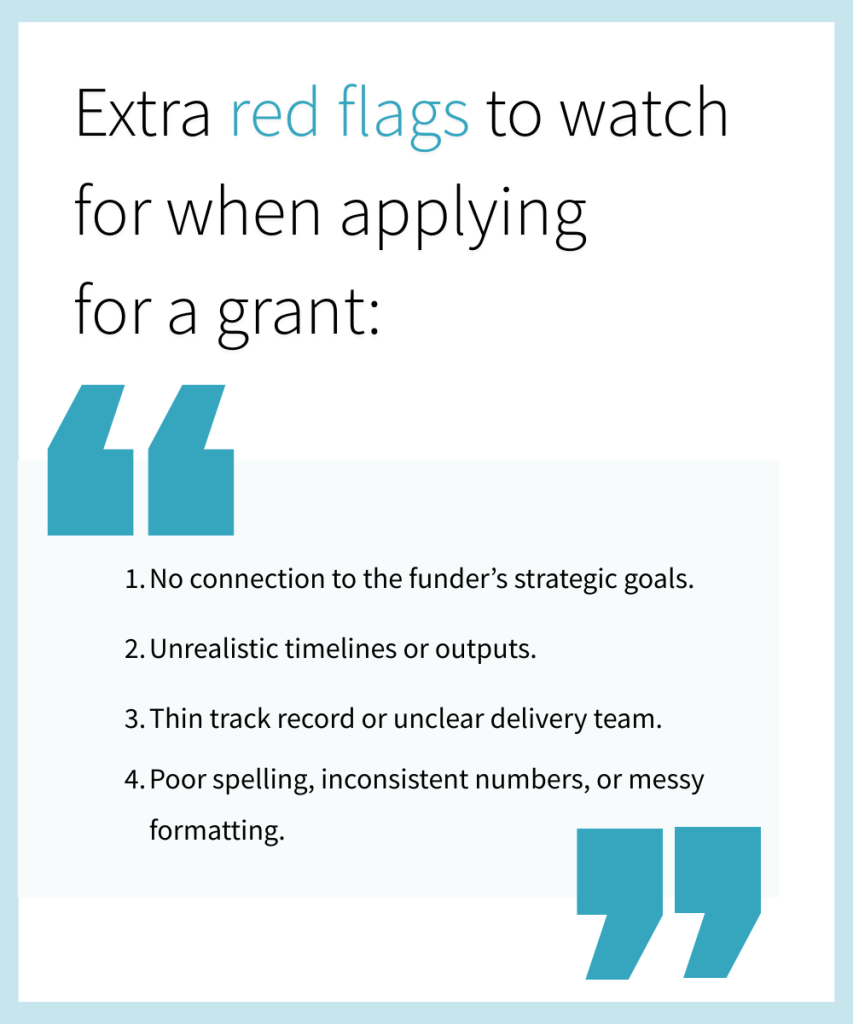
So much work goes into applying for a grant. That’s why rejection stings. But it’s often not about the strength of your idea, it’s about how well you followed the brief. 

Below are ten of the most common reasons grant applications miss the mark, and how you can avoid the same fate next time.


  1. Ignoring eligibility
  2. A weak or wandering story
  3. Unclear budgets
  4. No evidence or outcomes
  5. Missing governance or compliance info
  6. Not following instructions
  7. No risk or sustainability plan
  8. Submitting at the last minute
  9. No community buy-in
  10. Weak reporting plan


Key takeaways 


  • Grant applications are often rejected because they do not meet eligibility requirements, making the initial eligibility check one of the most important steps.
  • A clear project narrative matters. Funders want to understand what the project will achieve, why it matters and how it will be delivered.
  • Budgets should be detailed and transparent, with costs clearly explained and aligned to project activities.
  • Evidence and measurable outcomes strengthen applications, helping demonstrate the need for funding and how success will be evaluated.
  • Governance, compliance and supporting documents are essential, as missing information can affect eligibility and assessment.
  • Strong applications include risk, sustainability and reporting plans, showing how the project will be managed and measured beyond the funding period.


1. Ignoring eligibility

Always check the basics. If you’re not eligible, you’re out from the start. Don’t waste your time on grants that don’t fit.


2.  A weak or wandering story

Funders need clarity. If you can’t explain what your project does, why it matters, and how it will be delivered – quickly and clearly – it will cost you.


3. Unclear budgets

Avoid vague terms like “miscellaneous”. Break down your numbers and explain them. Funders want transparency.


4. No evidence or outcomes

Back up your case. Use data to show the need, and outline how you’ll measure success.


5. Missing governance or compliance info

Many grants require proof of insurance, board details, policies or financials. Make sure your documents are current and ready.


6. Not following instructions

Stick to word counts. Use the right templates. Upload the correct file types. A great application can still be ruled ineligible for admin errors.


7. No risk or sustainability plan

Funders want to know your project is viable — even if something goes wrong or funding ends. Spell that out.


8. Submitting at the last minute

Leave time for reviews, tech issues, and final polish. Rushing means mistakes.


9. No community buy-in

If the project serves a community, show how they’ve been involved. Add letters of support or quote conversations and feedback.


10. Weak reporting plan

Funders expect to see how you’ll track and report on progress. It’s a core part of grant accountability.


Final thought 

Grants are competitive. But most rejections happen for predictable reasons. By planning ahead, tightening your narrative, and double-checking the details, you’ll improve your chances dramatically. 

Get grant ready – not just application ready!


Ready to avoid these common pitfalls?

At FundFindrs, we specialise in making sure your grant application doesn’t fall at the avoidable hurdles. From checking eligibility and strengthening your story, to building clear budgets and managing compliance, we partner with you through the entire process. Our team knows what funders are looking for and how to help you stand out. 

Book a FREE consultation today and take the guesswork out of your next grant application. 


Industry Growth Program (IGP):what’s changed, what matters, and who should apply

Last reviewed: July 02, 2026


The Industry Growth Program (IGP) is one of the Federal Government’s key funding pathways for Australian SMEs looking to commercialise innovation and scale their businesses. 

However, the program has shifted significantly. 

Following the Federal Government’s $102 million funding reduction (MYEFO), the IGP is no longer a broadly accessible grant. It is now a highly competitive program focused on commercially viable projects with clear economic impact. 

For businesses, this changes the approach entirely. The question is no longer: “Are we eligible?” but it should be: “Are we competitive enough to be funded?”.

In this article, we break down how the program works today, what has changed, and, most importantly, how to assess whether your business is genuinely positioned to succeed. 


IMPORTANT NOTE: Following the announcement of the Federal Budget 2026-27, the Industry Growth program has been put on hold affecting both new applicants and those already in the pipeline. At this stage, it hasn’t been confirmed if it will re-commence, be replaced or be cancelled. We will update as further information comes to light.


Key takeaways 

  • The IGP is currently paused. Following the 2026–27 Federal Budget, the program is on hold for new applicants and those already in the pipeline.
  • Funding was reduced by $102 million. The IGP is no longer a broadly accessible grant and is now focused on highly competitive, commercially viable projects.
  • Competitiveness matters more than eligibility. Being eligible does not guarantee funding in the current assessment environment.
  • The program has two stages: Advisory support to strengthen commercialisation strategy, followed by grant funding for the strongest projects.
  • Innovation alone is not enough. Successful applications must demonstrate commercial readiness, execution capability and measurable economic impact.
  • IGP and R&DTI serve different purposes. R&DTI supports eligible R&D activities retrospectively, while IGP supports future commercialisation and growth.
  • Application quality is critical. Strong positioning and commercial evidence play a major role in funding outcomes.


1 – What is the Industry Growth Program  

The IGP, delivered through business.gov.au, combines advisory support and matched grant funding to help businesses move from innovation to commercialisation. 


In practice, the program operates as a two-stage process: 

  1. Advisory stage – designed to assess and strengthen your commercial strategy  
  1. Grant stage – where funding is awarded to the most competitive projects  


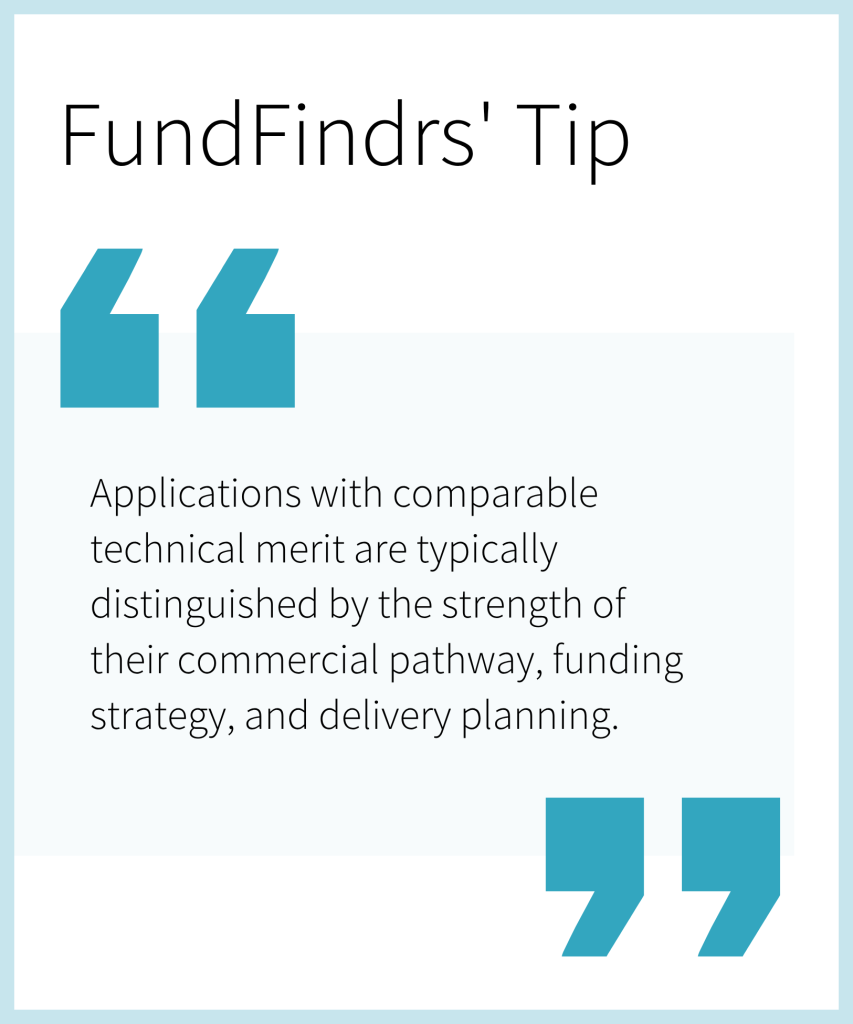
This structure reflects a clear objective from government: to fund outcomes, not just ideas. The program prioritises businesses that can demonstrate a clear pathway to market, the ability to execute, and the capacity to generate measurable economic outcomes. As a result, technical innovation alone is not enough, applications must show how that innovation translates into commercial impact. 


2 – What’s changed in the Industry Growth Program: funding cuts and increased competition 

Recent funding reductions have reshaped the Industry Growth Program. 

Businesses should expect: 

  • Fewer grants awarded  
  • Greater scrutiny on applications  
  • Stronger focus on commercial readiness  
  • Increased importance of financial capability and co-investment  

As a result, application quality and positioning now play a critical role in success. 


Stronger competition means greater emphasis on commercial positioning, financial capacity and delivery readiness. FundFindrs helps businesses strengthen these areas before applying.


3 – How the program works 

Step 1: Advisory Service (mandatory) 

All applicants must begin with the IGP Advisory Service. 

This involves submitting an application that assesses your: 

  • Business model  
  • Innovation viability  
  • Commercialisation pathway  


If eligible, you will work with an Industry Growth Program Adviser to: 

  • Test your strategy  
  • Identify risks and gaps  
  • Define a clear pathway to market  


It’s important to know this stage is mandatory once you cannot access grant funding without completing it. 


Step 2: Grant Funding 

Businesses that successfully progress may be eligible for one of two streams: 

Early-Stage commercialisation grants
– Funding available: $50,000 – $250,000
– Objective: Supporting businesses moving toward market readiness 

Commercialisation and growth grants
– Funding available: $100,000 – $5 million
– Objective: Supporting businesses ready to scale 

Both streams require: 

  • Matched funding (co-contribution)  
  • Demonstrated financial capability  
  • Clear commercial outcomes  

Funding is awarded on merit, and competition is strong.


Industry Growth program Tip


4 – Industry Growth Program eligibility overview 

To be eligible, businesses must generally: 

  • Be an Australian SME  
    • Fewer than 200 employees  
    • Turnover under $20 million (last three financial years) 
       
    • Value-add in resources  
    • Agriculture, forestry and fisheries  
    • Transport  
    • Medical science  
    • Renewables and low emissions technologies  
    • Defence capability  
    • Enabling technologies (e.g. AI, robotics, biotech)  
  • Demonstrate:  
    • Commercial potential and scalability  
    • IP ownership or access rights  
    • Financial capacity to co-invest  


5 – What makes a competitive application in 5-steps 

With increased competition, successful applications typically demonstrate: 

1 – Clear commercial outcomes
A defined pathway to revenue, market adoption, or industry impact 

2 – Strong market and technical positioning
Evidence of demand, traction, or validated development 

3 – Financial readiness
Capacity to fund your share of the project, supported by evidence and an Accountant Declaration 

4 – Structured project planning
Clear milestones, timelines, budgets, and risk considerations 

5 – Alignment with government priorities
A direct link to NRF sectors and broader economic outcomes 


6 – A common misconception 

One of the most common mistakes is treating the IGP as a standard grant application. 

In reality, it functions as a commercial assessment process. That’s why eligibility alone does not determine outcome success. Applications are assessed on quality, clarity, and commercial viability — which is why many businesses consider working with a grant writing consultant to strengthen their approach and overall submission strategy. 

Is the Industry Growth Program right for your business? 

The IGP is best suited to businesses that: 

  • Are developing commercially viable innovations  
  • Have a clear pathway to market  
  • Can co-invest in their growth  
  • Are ready to compete in a merit-based funding environment  

If your business is still validating early-stage ideas or lacks financial readiness, it may be worth exploring alternative pathways first. 


7 – Where IGP fits within your funding strategy 

The Industry Growth Program (IGP) is often considered alongside programs such as the R&D Tax Incentive (R&DTI). 

While both support innovation, they serve different purposes: 

  • R&DTI supports eligible R&D activities retrospectively  
  • IGP supports forward-looking commercialisation and growth  

For many businesses, these programs can be complementary when used strategically. 


8 – How FundFindrs can support your application 

Navigating programs like the IGP requires more than understanding eligibility criteria. If you’re considering apply to it, the first step is understanding your position — not just your eligibility. 

At FundFindrs, we work with businesses to: 

  • Assess whether the program is the right fit  
  • Strengthen commercial positioning before applying  
  • Prepare clear, compliant applications  
  • Support both advisory and funding stages  

Our approach is grounded in practical experience across multiple funding programs and industries.  


Book a FREE consultation with FundFindrs to assess your suitability for the Industry Growth Program and build a clear strategy before applying.