Business Growth Archives - FundFindrs

Mastering the R&D Tax Incentive: expert tips for eligibility, air-tight applications and claim success

Last reviewed: July 17, 2026


Bruce Murray, FundFindrs R&D Consultant, shares key insights on qualifying, capturing eligible costs, and ensuring your business is ready to successfully claim the R&DTI


Navigating the Research and Development Tax Incentive (R&DTI) program can be complex, but with the right guidance, it is an invaluable funding opportunity to support business innovation and growth. According to the Australian Taxation Office, in the 2021–22 income year, over 11,500 companies in Australia claimed R&D expenditures totalling $11.2 billion, highlighting the program’s significant role in fostering innovation across various industries.


To help businesses better understand how to maximise this opportunity, we’re tapping into the expertise and knowledge of Bruce Murray, the lead for our R&D Team, who holds extensive experience both with the program itself and in guiding businesses through successful claims.


In this first interview, Bruce shares practical insights on aligning R&D strategies with long-term business goals, common challenges first-time claimants face, and effective methods to ensure all eligible costs are captured.


  1. Background & Experience
  2. Aligning R&D Strategy with Business Goals
  3. Key Industries & Sectors for R&D Tax Incentive
  4. Advice for First Time Applicants
  5. Advice for Repeat Applicants
  6. Working with Companies & Role of Collaboration


Key takeaways 


  • The R&D Tax Incentive can help businesses reinvest in innovation, supporting ongoing R&D activities and growth.
  • Aligning R&D activities with business objectives can help maximise the value of the program.
  • Understanding what qualifies as eligible R&D is critical, particularly when planning projects and preparing a claim.
  • Capturing all eligible expenditure is important, requiring accurate tracking and documentation throughout the year.
  • First-time and repeat claimants face different challenges, making a clear understanding of the program essential.
  • Strong collaboration between technical and financial teams can improve claim quality and support compliance with program requirements.


1. Could you please share a bit about your background and experience in guiding businesses through the R&D Tax Incentive program?

Certainly. I hold a Bachelor of Commerce with a major in accounting and a sub major in law, along with a Graduate Diploma of Applied Corporate Governance from the Governance Institute of Australia.


I have previously worked within the Department of Industry, Science and Resources (AusIndustry), where I was directly involved in the R&DTI program — reviewing applications and assisting businesses in understanding eligibility criteria and regulatory requirements. This hands-on experience has given me a deep, practical understanding of the program and how businesses can leverage it effectively. Since then, I have been applying this experience to support FundFindrs clients to ensure their claims air-tight and meet the legislative requirements.


Outside of this, I have spent part of my career in corporate governance, compliance and risk management, which are also valuable skills that I bring to the R&DTI process.


2. Can you provide examples of how a company can align its R&D strategy with its overall business goals to leverage the R&D Tax Incentive effectively?

Overall, the R&DTI program provide significant tax rebates for eligible R&D expenditure, allowing businesses to reinvest in innovation and contribute to strategic growth. R&DTI rebates provide companies with the financial flexibility to pursue advancements that not only drive progress but also support their long-term business objectives.


For example, a manufacturing company could use the R&DTI program to explore more efficient production techniques, reducing waste and improving sustainability — all of which may align with broader corporate goals. The key to maximising the benefits of the government program is to embed R&D as a core component of the business strategy rather than treating it as a separate cost activity.
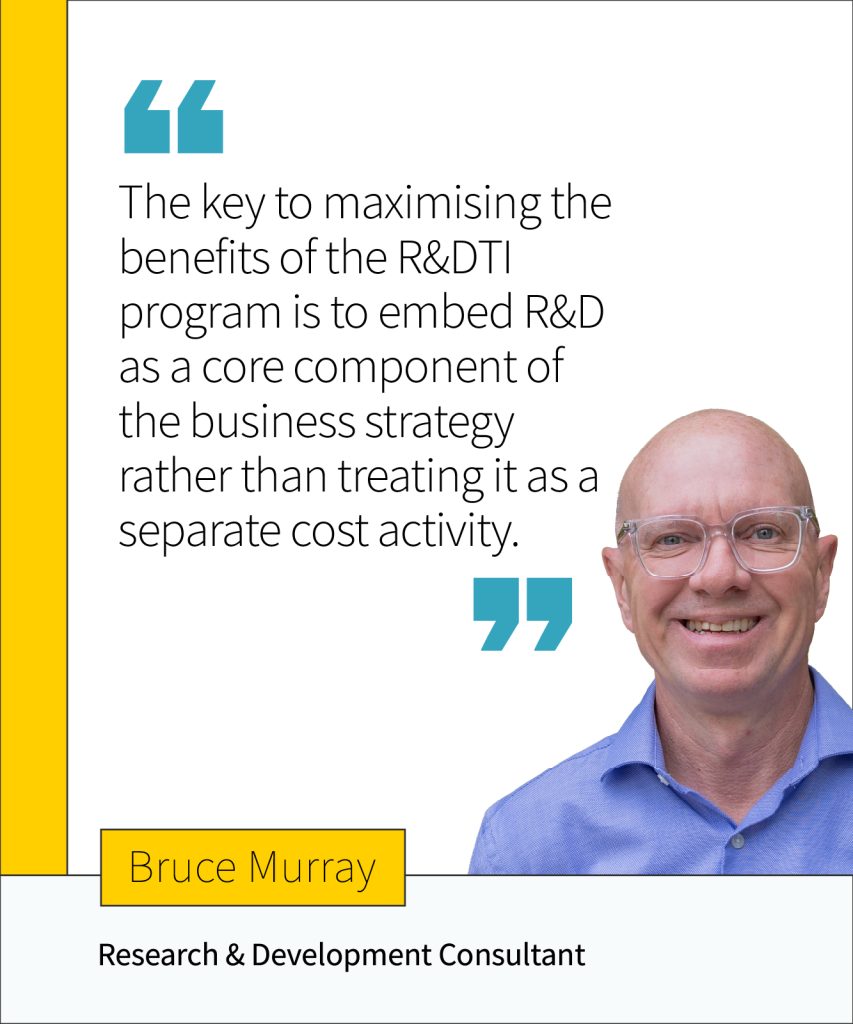
 

Bruce Murray's key tip on the R&D Tax Incentive


3. Are there particular industries or sectors that you believe can benefit more significantly from the R&D Tax Incentive, and why?

Yes, while the R&DTI program is industry-agnostic and open to businesses of varying sizes and sectors, certain industries tend to benefit more due to the nature of their operations. Sectors such as pharmaceuticals, biotechnology, software development, renewable energy, agriculture, and advanced manufacturing often have innovation embedded in their core activities. For instance, the pharmaceutical and biotech industries are heavily involved in product development and clinical trials, which naturally align with R&DTI criteria. Similarly, software companies engaged in developing new technologies or platforms often qualify.


However, the program isn’t limited to high-tech fields — innovative practices in agriculture, construction, and food production can also qualify. From small startups and SMEs to significant major corporations, a range of businesses can be eligible for the program. It’s a matter of understanding and establishing eligibility.


4. What advice would you give to a company considering applying for the R&D Tax Incentive for the first time?

For first-time claimants, my primary advice is to focus on accurate record-keeping and documentation retention from the start. Capturing eligible R&D costs throughout the year can be challenging if not planned properly. Businesses may set up dedicated project codes or a unique cost centre in their accounting system to distinguish R&D expenses from general operational expenses.


Evidence is key. Maintaining detailed financial records — such as timesheets, depreciation schedules, and invoices — will make it significantly easier to compile the required documentation when finalising a claim. Clear and well organised proof of evidence are crucial to demonstrate compliance with the R&DTI program’s requirements and maximise the rebate.
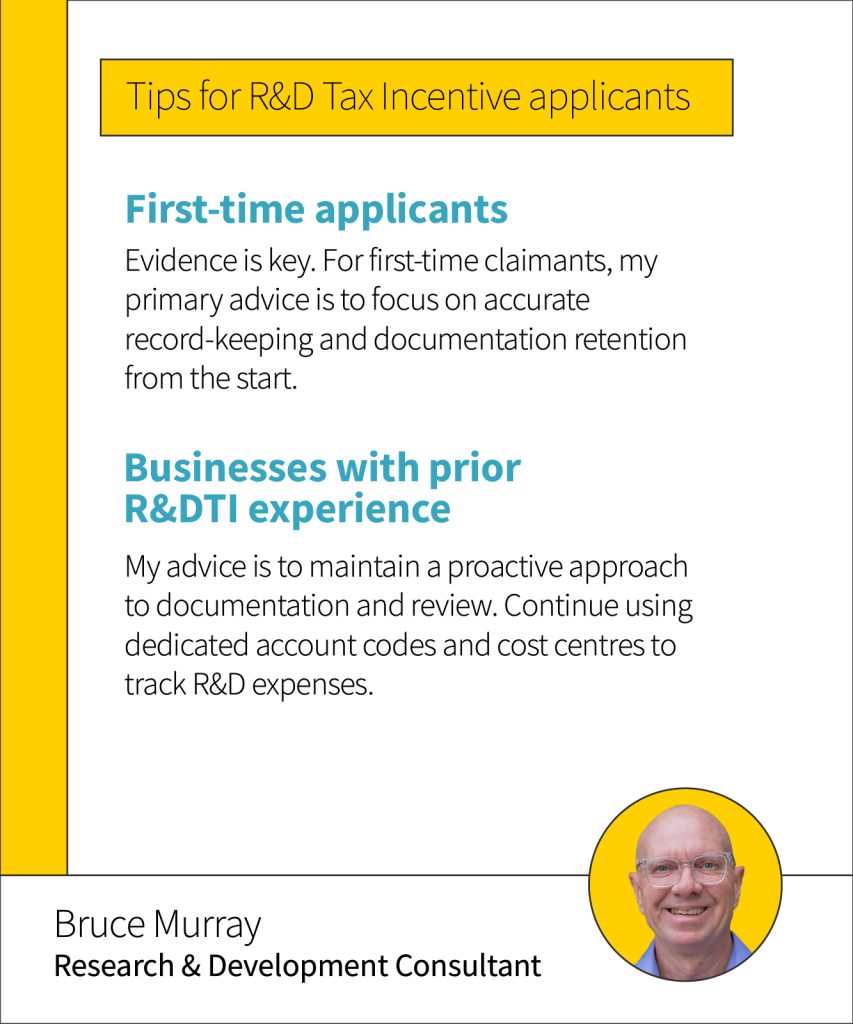
 

Bruce Murray's top tips for first-time and repeat R&DTI applicants


5. For businesses already familiar with the program, how can they improve or optimise their claims?

For businesses with prior R&DTI experience, my advice is to maintain a proactive approach to documentation and review. Continue using dedicated account codes and cost centres to track R&D expenses. However, to further optimise claims, consider implementing periodic reviews throughout the financial year rather than waiting until year-end. This assists in allowing to identify any gaps in documentation early and ensures all eligible activities and expenses are captured. Additionally, staying informed about any regulatory updates to the R&DTI program is essential to maintain compliance and maximise claim value.


Maximise Your R&D Tax Incentive Claim. FundFindrs’ specialist consultants can help identify all eligible expenses and optimise your application.


6. How do you typically work with companies, and what role does collaboration play in ensuring a successful application?

When it comes to financials, close collaboration ensures that all eligible R&D costs are identified, documented, and factored into the application, minimising the risk of missing out on valuable rebates. We also emphasise the importance of maintaining thorough records and evidence throughout the year, making the claims process smoother and more effective due to our regular communication.


Keeping an open dialogue is paramount in the way the FundFindrs’ team collaborates with businesses. Our role goes beyond simply preparing the application — we focus on truly understanding our clients’ business and projects through open, transparent discussions. This collaborative approach allows us not only to build a compelling case that accurately reflects the innovative work being conducted but also allows us to give valuable advice on an ongoing basis. Further, the better we know our clients, the more we are able to assist with identifying additional grants and funding opportunities that are suitable to help drive growth.


Not sure if you’re eligible for the R&D Tax Incentive?
Our free Blueprint breaks it down with an eligibility checklist, examples, and expert tips from the FundFindrs team.


At FundFindrs, we’re dedicated to making the R&D Tax Incentive application straightforward and stress-free for businesses like yours. From identifying eligible R&D activities to accurately capturing costs and preparing fully compliant applications, we help you focus on what matters most —innovation — while we handle the complexities behind the scenes. If you’re considering an R&DTI claim or simply want to ensure you’re maximising your return, Bruce together with our expert team are here to guide you. Take advantage of our FREE initial consultation.

Key Grants for Food and Beverage Companies in Australia

Last reviewed: July 17, 2026


Government funding plays a fundamental role in driving growth, innovation, and operational improvements within Australia’s Food & Beverage sector. With a broad range of grants available, businesses can struggle to identify the opportunities that best align with their unique needs.


In this article, we outline several key grants selected specifically for Food & Beverage companies, covering initiatives from safety enhancements to strategic investment. Each program is designed to help businesses elevate their operations, expand their capabilities, and invest in critical infrastructure.


  1. Distillery Door Programs – Hazardous Areas and Dangerous Goods Rebate
  2. Wine Exports China Re-Engagement Support Program
  3. Value Add Investment Grants Program (VAIG) – Feasibility Stream


Key takeaways 


  • Government grants can help Food & Beverage businesses improve safety, expand operations and invest in growth initiatives.
  • Funding opportunities are available across multiple areas, including workplace safety, export market development and value-add manufacturing projects.
  • Many grants are highly targeted, with specific eligibility criteria based on industry, location and business activities.
  • Co-contributions are often required, meaning businesses should be prepared to invest alongside government funding.
  • Export-focused programs can support market expansion, helping businesses strengthen their presence in international markets.
  • Planning ahead is essential, as grant programs have different funding limits, application requirements and closing dates.


1. Distillery Door Program – Hazardous Areas and Dangerous Goods Rebate

Enhancing safety in Victoria’s distilleries with essential rebates


Key Details

  • Closing by: 30 June 2025
  • Funding Available: Up to $50,000
  • Target Recipients: Distillers of alcoholic beverages in Victoria


Overview

This program assists Victorian distillers in investing in essential equipment and infrastructure to enhance safety in their facilities. It offers a rebate on eligible expenditure — up to 70% or 80% (GST exclusive), capped at $50,000 — while requiring a cash co-contribution of 20% or 30% depending on production volumes.


As part of a $20 million initiative to support Victoria’s distillery industry, the program funds activities such as hazardous area assessments, equipment installation, and specialist training, ensuring that all upgrades comply with Australian Standards and regulatory requirements.


Eligibility Criteria

Businesses must:

  • Hold a current Australian Business Number (ABN) and be registered as a legal entity in Victoria.
  • Own at least one still with a capacity of 50 litres or more.
  • Possess a valid ATO Manufacturer’s Licence and a current Victorian General or Producer’s Liquor Licence.
  • Have completed a hazardous area assessment, dangerous goods audit, OHS Essentials Program, or equivalent assessment undertaken from 1 April 2023 until closing date.
  • Meet the required cash co-contribution based on their production level.
  • Agree to participate in future program evaluation activities and comply with relevant workplace and employment obligations.


2. Wine Exporters China Re-Engagement Support Program

Supporting SA wine exporters to re-access China’s market


Key Details

  • Closing by: Program runs until June 2026
  • Funding Available: Approximately $1.9 million total funding pool
  • Target Recipients: South Australian wine exporters


Overview

This program is designed to help South Australian wine exporters re-enter the Chinese market following the lifting of tariffs on Australian wine. It delivers strategic support through market insights, export advisory services, coordinated trade missions, and targeted marketing campaigns.


Implemented by the South Australian Government in partnership with the South Australian Wine Industry Association (SAWIA), the program aims to revitalise international trade relationships and strengthen the region’s wine sector.


Eligibility Criteria

Businesses must:

  • Be a registered South Australian wine exporters with a valid ABN.
  • Demonstrate active engagement in exporting wine internationally.


3. Value Add Investment Grants Program (VAIG) – Feasibility Stream

Empowering WA food and beverage businesses with feasibility funding


Key Details

  • Closing by: 30 June 2025
  • Funding Available: Individual grants from $15,000 to $100,000 (up to $500,000 per project; total pool of $6 million)
  • Target Recipients: Agriculture, food, and beverage businesses in Western Australia


Overview

The VAIG – Feasibility Stream supports WA-based agriculture, food, and beverage businesses planning to expand, diversify, or relocate their value-add processing operations. This program funds planning and feasibility studies that underpin investments in new manufacturing capabilities, technology upgrades, or plant modernisation. By reducing WA’s reliance on imported products, the initiative fosters innovation, enhances sustainability, and drives job creation. Applicants are required to provide a minimum cash co-contribution of 30%, with some flexibility available for Aboriginal businesses.


Eligibility Criteria

Businesses must:

  • Be a private sector entity (including incorporated trustees, public companies, or cooperatives) with a valid ABN and GST registration.
  • Plan a project located in or relocating to Western Australia.
  • Demonstrate the financial capacity to meet the minimum cash co-contribution.
  • Have been in operation for at least 12 months (or possess a similar established track record).
  • Be capable of entering into a legally binding agreement with the WA Government.
  • Regional and Aboriginal businesses are encouraged to apply.


Reminder: Don’t Miss the R&D Tax Incentive (R&DTI)


The Research and Development Tax Incentive is a powerful mechanism that offers significant tax offsets and cash refunds for eligible R&D activities, easing the financial risks of innovation. Despite its benefits, many Food & Beverage companies are overlooking this opportunity. Leveraging the R&D Tax Incentive not only reduces R&D costs but also positions your business to drive technological advancements and compete globally.


Ensure you assess your eligibility and consider expert advice to fully integrate this incentive into your financial strategy for sustained growth and market leadership. Learn more about the R&DTI Program by visiting our dedicated page.


Food and Beverage Funding Opportunities for Australian Businesses


The grants listed above represent just a snapshot of the funding opportunities available to support the growth and innovation of Food and Beverage companies in Australia. If you’re looking to explore these options further and strengthen your market position, our team of experts is here to help.


With the complexities of the application process, partnering with experienced advisors is essential. That’s where FundFindrs comes in — we support you every step of the way. Book a FREE chat today for a tailored consultation.


From Idea to Identity: Branding as a Growth Catalyst

Every business starts with an idea, but an idea alone is never enough. To attract support, funding and partnerships, that idea needs to become a clear and consistent identity. This is where branding plays a critical role. It takes the spark of a vision and turns it into something credible and trustworthy, giving others the confidence to believe in what you are building. 

Strong branding is not a luxury reserved for big companies. For startups and small businesses, it can be the difference between being seen as “just an idea” and being recognised as a serious player. When paired with accessible digital marketing, branding unlocks growth from day one, helping you connect with audiences, build momentum and move forward with impact. 


  1. Why branding matters from day one 
  2. From founder vision to shared story 
  3. The role of digital marketing 
  4. A practical example 
  5. How Wollip supports businesses that want to take their brand to next level  
  6. Ready to take your idea from spark to standout? 


1. Why branding matters from day one 

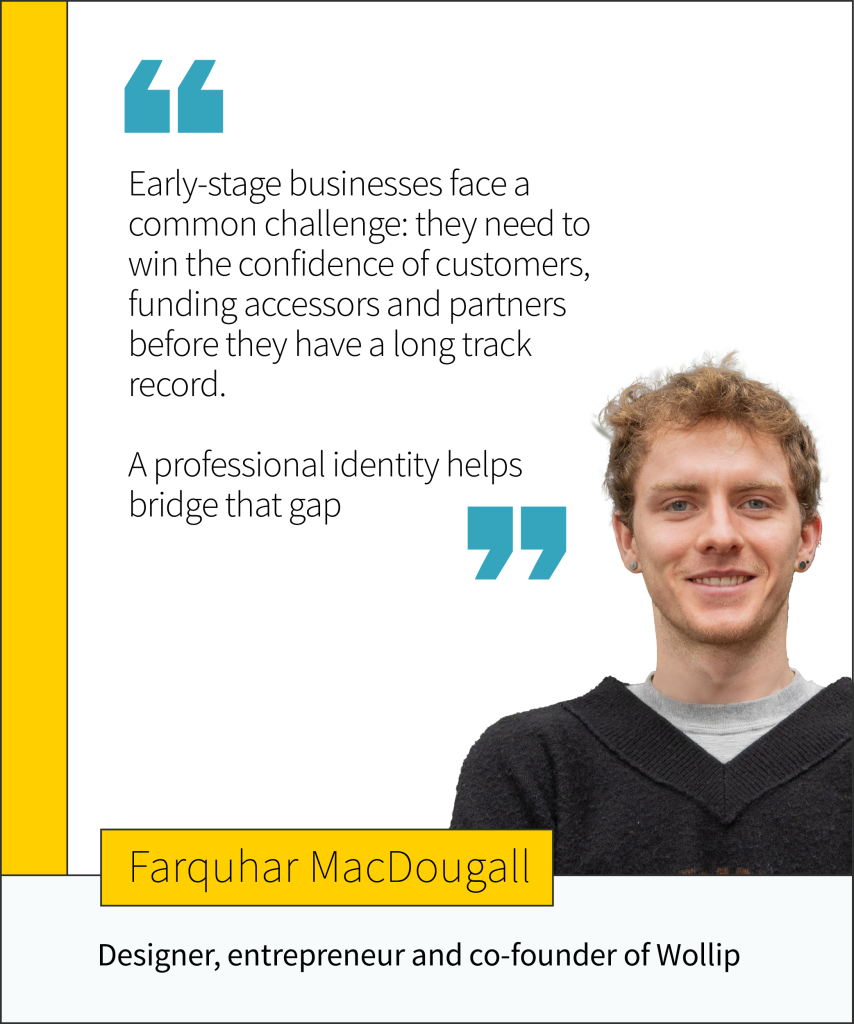
Early-stage businesses face a common challenge: they need to win the confidence of customers, funding accessors and partners before they have a long track record. A professional identity helps bridge that gap. It shows that you are organised, prepared and capable of delivering on your vision. 

Branding is not just a logo and colours. It is the sum of how your business presents itself and how people feel when they encounter it. Strong branding creates trust by showing consistency, professionalism and clarity. It reassures stakeholders that you are serious and reliable, and it gives them confidence that you can deliver on what you promise. 


2. From founder vision to shared story 

One of the biggest hurdles for new businesses is explaining their purpose in a way that others quickly understand. A strong brand identity gives you the tools to do that. It takes the founder’s passion and turns it into a story that can be shared with stakeholders, partners and communities. 

When your purpose is clear and your story is simple to grasp, people are far more likely to connect with it. Investors want to see that you have a vision they can believe in. Partners want to know what role they could play in that story. Customers want to feel part of something bigger than a transaction. The easier it is for each of these groups to understand and relate to your purpose, the easier it becomes to attract their support. 

A clear story is not about overselling. It is about giving people confidence that you know who you are, where you are going and why it matters. 


3. The role of digital marketing 

Alongside branding, digital marketing has become one of the most accessible ways for startups to grow. Unlike traditional advertising, channels like social media, email and content marketing do not require large budgets. With the right approach, even modest investments can build visibility, connect with communities and create early traction. 

This is especially valuable for startups that need to show activity and momentum before they have long track records. A clear brand paired with simple, low-cost digital strategies can make a business look established and trustworthy from the very beginning. 


4. A practical example 

Imagine two startups pitching the same concept. One presents with a loosely designed logo, a patchy website and messaging that changes depending on who is speaking. The other presents with a consistent identity, a clear one-line purpose and a digital presence that shows activity across its website and social channels. 

Both may have equally strong ideas, but the second is far more likely to earn trust. Stakeholders do not just back ideas. They back teams and brands that look ready to deliver. 


Farquhar MacDougall, Designer, Entrepreneur and Co-Founder of Wollip.


5. How Wollip supports businesses that want to take their brand to next level  

 Wollip ensures your professional identity tells the exact story you want it to. That includes: 


  • Creating brand systems that give founders confidence when pitching 
  • Designing websites that show credibility and traction 
  • Developing messaging frameworks that make the story clear and consistent 
  • Building social media strategies that connect with audiences and grow communities 
  • Running digital marketing campaigns that deliver impact without large budgets 
  • Using content creation, email marketing and automation tools to support growth sustainably 


Our goal is not to change the idea, but to give it the identity and digital presence it needs to be understood, trusted and supported. 


6. Ready to take your idea from spark to standout? 

Contact Wollip team at enquiries@wollip.au or visit wollipdesign.com.au to learn more. 


About the author  

Farquhar MacDougall is a designer, entrepreneur and co-founder of Wollip, a design and digital agency built to support growth and impact. With a background in communication design and a passion for startups, Farquhar combines creativity and strategy to help businesses turn ideas into clear, credible brands. Through Wollip, he also champions the next generation of designers by providing mentorship and real-world experience, helping students step confidently from university into industry. 

5 Benefits of Lodging Your R&DTI Claim Right Now


Last reviewed: July 17, 2026


Every year, thousands of Australian businesses benefit from the R&D Tax Incentive (R&DTI) — a government program offering up to 43.5% in tax offsets for eligible research and development activities. But many wait until the last minute to lodge their claim, which can slow cashflow, increase stress, and complicate tax lodgements.  

Whether you’ve claimed before or are exploring the R&DTI for the first time, FundFindrs is here to support you through the process, making it straightforward, simple and rewarding.

Early lodgement is the smart move and here are five reasons why.


  1. Access cash sooner  
  2. It’s easier to recall recent work
  3. Make all your lodgements seamless
  4. Avoid the seasonal bottlenecks 
  5. It gives you time to focus on your business
  6. FundFindrs makes it easy for everyone 


Key takeaways 


  • Early lodgement can improve cashflow, helping businesses access their R&D Tax Incentive refund sooner.
  • Claiming while activities are still recent makes it easier to capture accurate project details and supporting evidence.
  • Getting started early reduces administrative burden, helping avoid amendments and last-minute tax return adjustments.
  • Avoid seasonal bottlenecks caused by holiday periods and peak R&D Tax Incentive lodgement volumes.
  • Earlier access to funding may be possible through specialist lending solutions linked to expected R&D Tax Incentive refunds.
  • Taking action sooner provides greater certainty, allowing business owners to focus on growth rather than compliance deadlines.


1. Access cash sooner  

The sooner you lodge, the sooner you access your refund. That’s real money you can reinvest into your business, whether it’s hiring staff, launching a new product, or strengthening your financial position. For businesses new to the R&DTI, this can be a powerful funding boost to fuel innovation and growth. 


2. It’s easier to recall recent work

Your R&D activities for FY25 took place between 1 July 2024 and 30 June 2025. If you wait until the April 2026 deadline, that means you’ll be looking back nearly two years. Preparing now means the details are fresh, making it easier to gather accurate information and reducing the risk of missed or incomplete documentation. 


3. Make all your lodgements seamless

Your R&DTI Schedule and Company Tax Return (CTR) are separate but closely linked. Preparing your R&DTI claim early helps you or your accountant lodge your CTR with the correct R&D figures from the start. That means fewer amendments, less rework, and a smoother process for everyone involved. Even if you aren’t ready to submit your CTR yet, there are options available so you can still get the funding now.

We have partners who offer R&D loans, which are advances on your R&DTI refund, meaning you don’t have to wait until after you lodge your company tax return; you can access your refund and reinvest earlier. 


Looking for faster access to your R&D refund?

We work with specialist partners who can help you unlock your funds early


4. Avoid the seasonal bottlenecks 

There are two busy periods which can slow things down:

  • December/January means summertime, when some of your key staff may be on leave. 
  • March/April is when AusIndustry experiences peak R&DTI claim volumes because people didn’t get their claims in sooner.


5. It gives you time to focus on your business

Submitting your claim early gives you peace of mind, freeing up headspace to focus on your business. Instead of scrambling at the last minute, you’ll have confidence knowing your R&DTI refund is on its way — freeing up time and energy to focus on this year’s growth. 


Research and Development in the manufacturing sector.


6. FundFindrs makes it easy for everyone 

Whether you’ve claimed the R&DTI in the past, or you’re applying for the first time, FundFindrs supports you every step of the way to simplify what can often feel complex.

Our specialists work with you throughout the year to:  

  1. Identify and define eligible R&D activities with precision and clarity.  
  2. Strengthen documentation and evidence to support compliance.  
  3. Review previous claims for missed or under-claimed opportunities.  
  4. Provide guidance on structuring future projects for long-term benefit.  

This proactive, year-round partnership ensures your R&D claims are accurate, defensible, and optimised for value.


Let’s get your R&DTI started now 

 If you’re ready to get your refund sooner and make next year’s claim easier, our team can help you start today. Click here to book a FREE consultation. 

Industry Growth Program (IGP):what’s changed, what matters, and who should apply

Last reviewed: July 02, 2026


The Industry Growth Program (IGP) is one of the Federal Government’s key funding pathways for Australian SMEs looking to commercialise innovation and scale their businesses. 

However, the program has shifted significantly. 

Following the Federal Government’s $102 million funding reduction (MYEFO), the IGP is no longer a broadly accessible grant. It is now a highly competitive program focused on commercially viable projects with clear economic impact. 

For businesses, this changes the approach entirely. The question is no longer: “Are we eligible?” but it should be: “Are we competitive enough to be funded?”.

In this article, we break down how the program works today, what has changed, and, most importantly, how to assess whether your business is genuinely positioned to succeed. 


IMPORTANT NOTE: Following the announcement of the Federal Budget 2026-27, the Industry Growth program has been put on hold affecting both new applicants and those already in the pipeline. At this stage, it hasn’t been confirmed if it will re-commence, be replaced or be cancelled. We will update as further information comes to light.


Key takeaways 

  • The IGP is currently paused. Following the 2026–27 Federal Budget, the program is on hold for new applicants and those already in the pipeline.
  • Funding was reduced by $102 million. The IGP is no longer a broadly accessible grant and is now focused on highly competitive, commercially viable projects.
  • Competitiveness matters more than eligibility. Being eligible does not guarantee funding in the current assessment environment.
  • The program has two stages: Advisory support to strengthen commercialisation strategy, followed by grant funding for the strongest projects.
  • Innovation alone is not enough. Successful applications must demonstrate commercial readiness, execution capability and measurable economic impact.
  • IGP and R&DTI serve different purposes. R&DTI supports eligible R&D activities retrospectively, while IGP supports future commercialisation and growth.
  • Application quality is critical. Strong positioning and commercial evidence play a major role in funding outcomes.


1 – What is the Industry Growth Program  

The IGP, delivered through business.gov.au, combines advisory support and matched grant funding to help businesses move from innovation to commercialisation. 


In practice, the program operates as a two-stage process: 

  1. Advisory stage – designed to assess and strengthen your commercial strategy  
  1. Grant stage – where funding is awarded to the most competitive projects  


This structure reflects a clear objective from government: to fund outcomes, not just ideas. The program prioritises businesses that can demonstrate a clear pathway to market, the ability to execute, and the capacity to generate measurable economic outcomes. As a result, technical innovation alone is not enough, applications must show how that innovation translates into commercial impact. 


2 – What’s changed in the Industry Growth Program: funding cuts and increased competition 

Recent funding reductions have reshaped the Industry Growth Program. 

Businesses should expect: 

  • Fewer grants awarded  
  • Greater scrutiny on applications  
  • Stronger focus on commercial readiness  
  • Increased importance of financial capability and co-investment  

As a result, application quality and positioning now play a critical role in success. 


Stronger competition means greater emphasis on commercial positioning, financial capacity and delivery readiness. FundFindrs helps businesses strengthen these areas before applying.


3 – How the program works 

Step 1: Advisory Service (mandatory) 

All applicants must begin with the IGP Advisory Service. 

This involves submitting an application that assesses your: 

  • Business model  
  • Innovation viability  
  • Commercialisation pathway  


If eligible, you will work with an Industry Growth Program Adviser to: 

  • Test your strategy  
  • Identify risks and gaps  
  • Define a clear pathway to market  


It’s important to know this stage is mandatory once you cannot access grant funding without completing it. 


Step 2: Grant Funding 

Businesses that successfully progress may be eligible for one of two streams: 

Early-Stage commercialisation grants
– Funding available: $50,000 – $250,000
– Objective: Supporting businesses moving toward market readiness 

Commercialisation and growth grants
– Funding available: $100,000 – $5 million
– Objective: Supporting businesses ready to scale 

Both streams require: 

  • Matched funding (co-contribution)  
  • Demonstrated financial capability  
  • Clear commercial outcomes  

Funding is awarded on merit, and competition is strong.


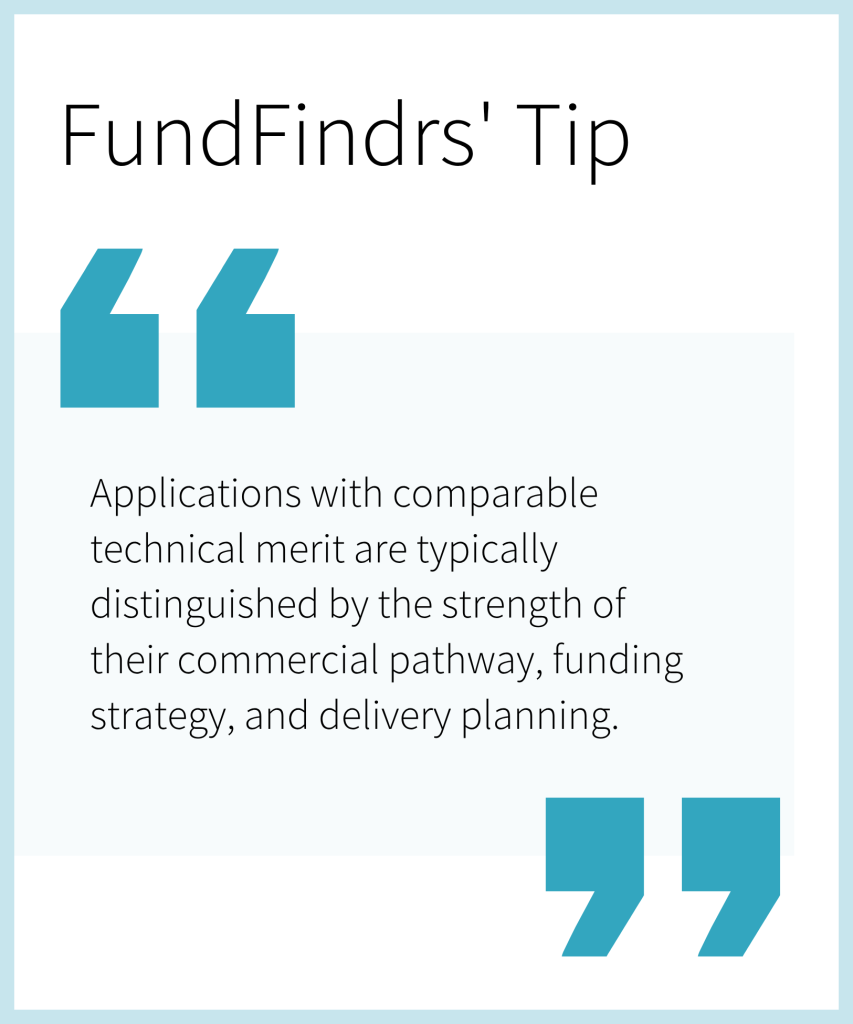
Industry Growth program Tip


4 – Industry Growth Program eligibility overview 

To be eligible, businesses must generally: 

  • Be an Australian SME  
    • Fewer than 200 employees  
    • Turnover under $20 million (last three financial years) 
       
    • Value-add in resources  
    • Agriculture, forestry and fisheries  
    • Transport  
    • Medical science  
    • Renewables and low emissions technologies  
    • Defence capability  
    • Enabling technologies (e.g. AI, robotics, biotech)  
  • Demonstrate:  
    • Commercial potential and scalability  
    • IP ownership or access rights  
    • Financial capacity to co-invest  


5 – What makes a competitive application in 5-steps 

With increased competition, successful applications typically demonstrate: 

1 – Clear commercial outcomes
A defined pathway to revenue, market adoption, or industry impact 

2 – Strong market and technical positioning
Evidence of demand, traction, or validated development 

3 – Financial readiness
Capacity to fund your share of the project, supported by evidence and an Accountant Declaration 

4 – Structured project planning
Clear milestones, timelines, budgets, and risk considerations 

5 – Alignment with government priorities
A direct link to NRF sectors and broader economic outcomes 


6 – A common misconception 

One of the most common mistakes is treating the IGP as a standard grant application. 

In reality, it functions as a commercial assessment process. That’s why eligibility alone does not determine outcome success. Applications are assessed on quality, clarity, and commercial viability — which is why many businesses consider working with a grant writing consultant to strengthen their approach and overall submission strategy. 

Is the Industry Growth Program right for your business? 

The IGP is best suited to businesses that: 

  • Are developing commercially viable innovations  
  • Have a clear pathway to market  
  • Can co-invest in their growth  
  • Are ready to compete in a merit-based funding environment  

If your business is still validating early-stage ideas or lacks financial readiness, it may be worth exploring alternative pathways first. 


7 – Where IGP fits within your funding strategy 

The Industry Growth Program (IGP) is often considered alongside programs such as the R&D Tax Incentive (R&DTI). 

While both support innovation, they serve different purposes: 

  • R&DTI supports eligible R&D activities retrospectively  
  • IGP supports forward-looking commercialisation and growth  

For many businesses, these programs can be complementary when used strategically. 


8 – How FundFindrs can support your application 

Navigating programs like the IGP requires more than understanding eligibility criteria. If you’re considering apply to it, the first step is understanding your position — not just your eligibility. 

At FundFindrs, we work with businesses to: 

  • Assess whether the program is the right fit  
  • Strengthen commercial positioning before applying  
  • Prepare clear, compliant applications  
  • Support both advisory and funding stages  

Our approach is grounded in practical experience across multiple funding programs and industries.  


Book a FREE consultation with FundFindrs to assess your suitability for the Industry Growth Program and build a clear strategy before applying.