Research and Development Archives - FundFindrs

The R&D Tax Incentive Unpacked: All your burning questions answered.

Last reviewed: July 28, 2026


What’s the buzz around the Research and Development Tax Incentive (R&DTI)? Is it just another grant, or is there more to it?

For over four decades, the R&DTI has been a game-changer for Australian businesses, offering tax credits to cut down on research and development costs. It’s not just for the big players; startups and established companies in tech, manufacturing, pharma, agriculture and other industries can all benefit. By providing tax offsets for eligible R&D activities, the incentive fuels innovation and helps businesses grow and compete globally.

Let’s break it down with some practical insights and examples from experts to help you get the most out of the R&DTI.


In the next 8 minutes or so, we’ll comprehensively cover:


Key takeaways 


  • The R&D Tax Incentive (R&DTI) is a government program that provides tax offsets for eligible R&D activities, helping businesses reduce the cost of innovation.
  • The program is available to businesses of all sizes and across a wide range of industries, including technology, manufacturing, agriculture and pharmaceuticals.
  • Eligible businesses may be able to offset up to 43.5% of their R&D expenditure, improving cash flow and reducing financial risk.
  • The R&DTI is designed to encourage innovation, supporting businesses that invest in developing new or improved products, processes, services or technologies.
  • Understanding eligibility, claimable costs and application requirements is critical to maximising the value of the program.
  • R&DTI funding can be reinvested into future projects and business growth, helping companies continue innovating and scaling.


R&D Tax Incentive

1 – What is the R&D Tax Incentive?

The Research and Development Tax Incentive (R&DTI) is a government program that provides a tax offset to Australian businesses that are engaged or planning to invest in eligible R&D activities. The primary aim of the program is to encourage innovation by reducing the financial risks associated with R&D projects, thereby stimulating advancements across various industries.


By participating, businesses like yours can significantly recover some of their investments, offsetting a portion of the costs associated with their R&D endeavours. This incentive stimulates innovation across various industries by reducing the financial risks associated with R&D projects while allowing business owners to make ambitious projects more feasible and less financially daunting.


2 – Why Should You Apply for the R&DTI and Is It Worth It?

Wondering why you should apply for the R&DTI and what its benefits are? The Research & Development Tax Incentive can become much more than just a financial incentive for your business in Australia. It’s an opportunity to propel your company forward and ensure long-term success.


Here are just 3 reasons why you should seriously consider it:

  • Financial Relief: You can offset up to 43.5% of your R&D costs, providing a substantial reduction in your overall expenses.
  • Growth Potential: The financial benefits can be reinvested into your business, fuelling further innovation and expansion.
  • Collaboration: Partnering with registered Research Service Providers can enhance your R&D efforts and outcomes, driving your projects to new heights.


3 – What R&D Costs Can Be Claimed?

The R&D tax benefits cover a variety of costs associated with research and development activities, making it easier for businesses to manage their expenses.


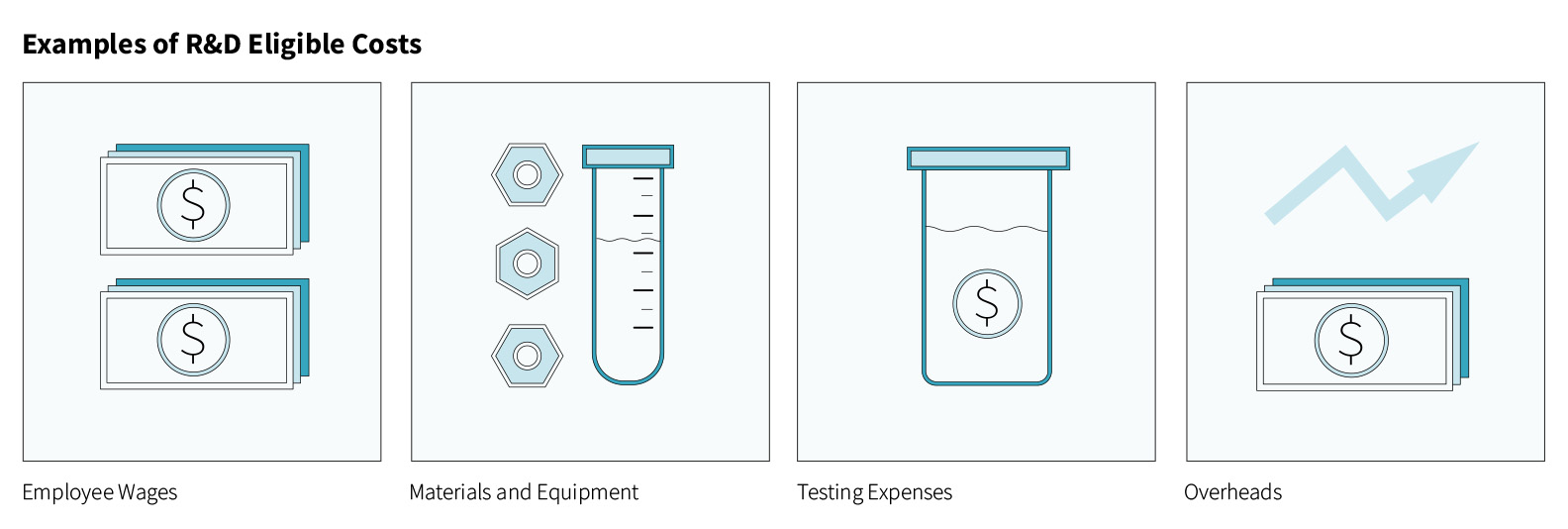
Some examples of eligible costs could include:

  • Employee Wages: Salaries and associated costs (such as superannuation) for employees directly involved in R&D activities.
  • Materials and Equipment: Costs of materials and equipment used specifically for R&D projects.
  • Testing Expenses: Expenditures related to testing and experiments conducted as part of your R&D.
  • Overheads: Relevant overhead costs that can be attributed to R&D activities such as subscriptions, phone and internet bills and even rent.
 

Examples of eligible R&D costs


A careful examination of each eligible cost ensures that businesses make the most of this opportunity, enhancing the financial benefits derived from R&D activities.


4 – How Much Can You Claim?

The golden question: how much can you receive under the R&DTI?


The answer is – up to 43.5% of your Research and Development costs from the previous financial year. The exact amount you can claim through varies based on your business’s turnover:

  • Businesses with less than $20 million turnover: The refundable R&D tax offset is your corporate tax rate plus an 18.5% premium.
  • Businesses with more than $20 million turnover: The non-refundable R&D tax offset is your corporate tax rate plus an incremental premium.


Let’s look at two examples:

  • A business with a $5 million turnover spending $250,000 on R&D in one financial year with a corporate tax rate of 30%, could be eligible for a $121,250 refund.
  • A business with a $25 million turnover spending $500,000 on R&D in the last financial year with a 30% corporate tax rate, could be eligible for $192,500 to $232,500, depending on their R&D intensity which informs the incremental premium.


To get a rough indication of the amount your business can receive, utilise this free R&D Tax Incentive calculator.


Not sure if you’re eligible for the R&D Tax Incentive?
Our free Blueprint breaks it down with an eligibility checklist, examples, and expert tips from the FundFindrs team.


5 – Is There a Minimum Spending Requirement?

Currently, businesses need to have a minimum R&D spend of $20,000 to qualify for this valuable incentive. This spending threshold is a key factor to consider as you explore the potential benefits and opportunities that the R&D Tax Incentive can bring to your business. Collaboration with registered Research Service Providers (RSPs) is often beneficial, as you don’t have to reach the minimum spend threshold to claim the R&DTI if you use an RSP.


6 – Are You Eligible?

If you’ve made it this far, you might be considering: “Is my business eligible for this Incentive?” Let’s find out.


Eligibility for the R&D Tax Incentive is designed to be accessible to a wide range of businesses. To qualify, your business must be:

  • Incorporated in Australia: Alternatively, if your business is under foreign law but conducts eligible R&D activities in Australia, you may still qualify.
  • Meeting the Spending Threshold: Your business must spend over $20,000 on eligible R&D activities in a financial year. This ensures that the incentive supports substantial and impactful research and development efforts.
  • Conducting R&D Activities: Your company needs to be conducting or planning to conduct at least one eligible R&D activity. Those activities can attempt to generate new/improved products, services, and processes or can be conducted to support them.


There are other main criteria and requirements to determine your eligibility and guide you through the identification of a Core or Supporting R&D Activity. To find out if your business could be eligible for the R&DTI get in contact with our team of experts to book a FREE meeting.


7 – What are the most common industries that typically apply for the R&DTI?

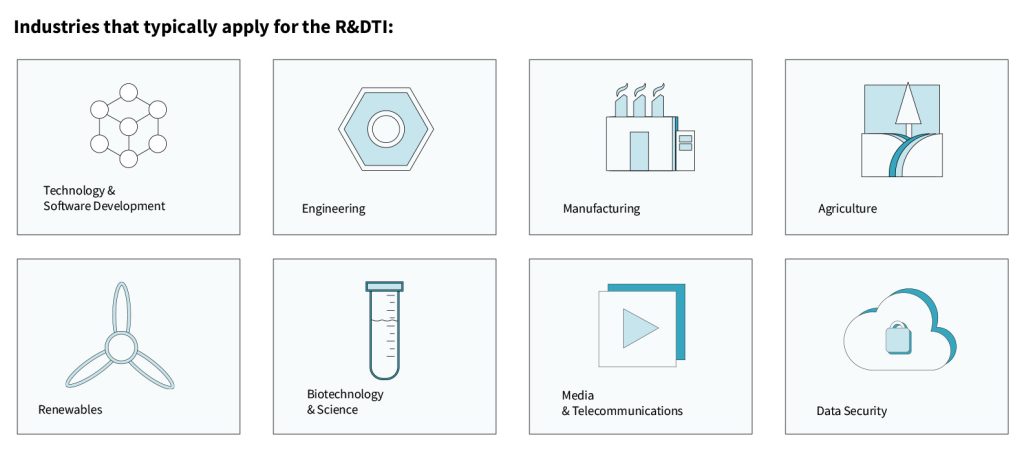
Companies from many industries can benefit from the R&D Tax Incentive to drive innovation and growth to their business. It’s common to see technology and software development companies leverage the incentive to fund advancements in digital solutions, enhancing efficiency and user experience.


Other frequent examples are engineering and manufacturing companies which also heavily invest in innovation through the incentive, fostering the development of new products and processes that improve productivity and competitiveness. Additionally, companies from agriculture, mining, biotechnology, renewables, and other sectors typically submit their applications to the R&D Tax Incentive to help them innovate and create new services/products.
 

Common industries applying for R&DTI


While these industries have traditionally been prominent users of the program, the scope of eligible activities is broad, inviting exploration from other sectors keen on advancing through research and development. The R&D Tax Incentive boasts a substantial fund exceeding $1 billion, offering an expansive resource for all types of businesses.


8 – How simple is the R&DTI Application Process?

Applying for the R&D Tax Incentive involves several key steps to ensure that your application is thorough and accurate and can look like the following:

  1. Assess Eligibility: Review the program’s criteria to confirm that your business qualifies, and your R&D activities are eligible.
  2. Prepare Documentation: Compile detailed records of the nature and scope of your R&D activities, including financial statements and project descriptions.
  3. Submit Application: Submit your completed application to the Australian Taxation Office (ATO) and the Department of Industry, Innovation, and Science. You must submit your application within 10 months after the end of the financial year.


Maybe you are thinking: “There are too many steps involved in this process and I don’t have time to do so, so should I bother applying?”


Although there are a handful of steps involved in applying for the R&D Tax Incentive, keep in mind all the potential benefits quite outweigh the time spent doing so. Additionally, we can relieve the pressure from your shoulders. One way to boost your chances of success is by letting our team of experts handle the entire process for you. Book a free consultation to get the information and support you need to confidently complete your R&DTI claim.


9 – What’s the Timeline from Applying to Receiving the R&DTI Funds?

Now that we’ve covered the details of the Research and Development Tax Incentive, the next question naturally revolves around understanding the timeline and all its steps—from the day you apply to the moment the refund lands in your account. This understanding is crucial to effectively plan your finances and, possibly, bring forward your plans to growth and (re)invest.


Applications typically run from 1 July to 30 April of the following financial year. For instance, if you’re claiming for the financial year 1 July 2023 – 30 June 2024, you can apply from 1 July 2024 to 30 April 2025. Once approved, funds usually reach your account within a few weeks to a couple of months, providing timely financial support to your business.


You can streamline this process and strategically optimise your outcome by count with our support. The FundFindrs team is ready to assist you through this process, allowing you to reinvest funds into your business as quickly as possible.


10 – How to Maximise Your R&DTI Claim?

Are you ready to take most advantage of the Research & Development Tax Incentive (RDTI)? there a several ways to maximise your claim and make sure your process is thorough and solid. Here are some tips:

  1. Stay abreast of any changes to the program. Any recent changes that may impact your eligibility or the benefits you can receive will be carefully considered in your unique strategy. An easy way to stay on top is signing up for our Newsletter and following us on LinkedIn, Facebook and Instagram. We stay informed, so you don’t have to.
  2. Keep your records organised in a systematic way. Having well-organised documentation not only strengthens your claim but simplifies the RDTI process.
  3. Examine your expenditure with maximum attention to allocate all possible expenses to streamline your claim.
  4. Use a checklist to ensure you are claiming the R&DTI correctly according to the legislation minimising compliance risks. The catch to better securing this grant? Nailing your application.
  5. Navigate the complex process with an expert team like FundFindrs. We’ll handle the application pressure and ensure you get the most out of your R&D efforts.
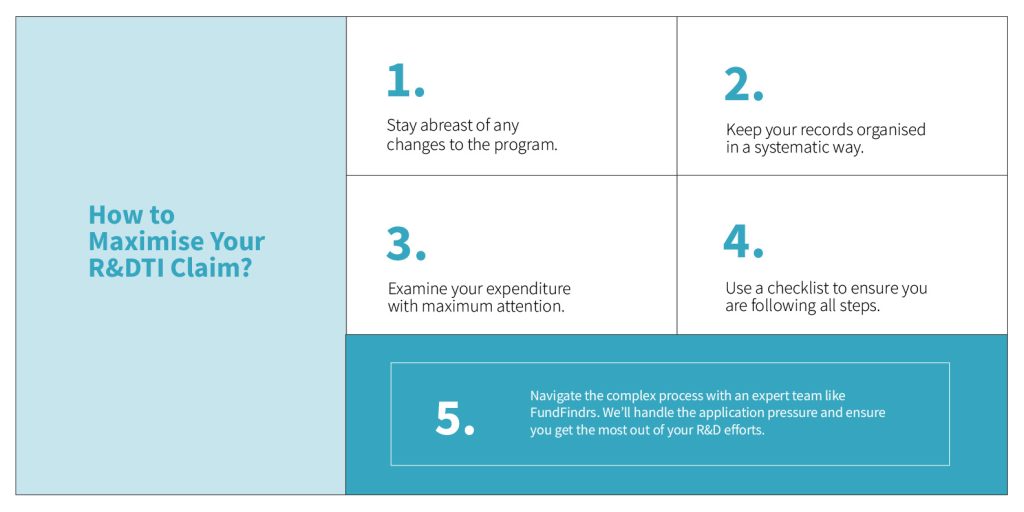
 

How to maximise your R&DTI claim


Book your FREE 30 minute starter chat with us


Before You Go

Don’t let your innovation go unrewarded. Unlock your next phase of growth with the Australian R&D Tax Incentives by reaping its countless benefits. Whilst the application process is detailed, the returns are well worth the investment.


So do your business (and yourself) a favour and get applying! And as always, the FundFindrs team is here to assist you through the entire process as well as any other queries or questions.


Simply send us an email or give us a call at (02) 9072 1720 at anytime and we’ll get back to you ASAP.

Mastering the R&D Tax Incentive: expert tips for eligibility, air-tight applications and claim success

Last reviewed: July 17, 2026


Bruce Murray, FundFindrs R&D Consultant, shares key insights on qualifying, capturing eligible costs, and ensuring your business is ready to successfully claim the R&DTI


Navigating the Research and Development Tax Incentive (R&DTI) program can be complex, but with the right guidance, it is an invaluable funding opportunity to support business innovation and growth. According to the Australian Taxation Office, in the 2021–22 income year, over 11,500 companies in Australia claimed R&D expenditures totalling $11.2 billion, highlighting the program’s significant role in fostering innovation across various industries.


To help businesses better understand how to maximise this opportunity, we’re tapping into the expertise and knowledge of Bruce Murray, the lead for our R&D Team, who holds extensive experience both with the program itself and in guiding businesses through successful claims.


In this first interview, Bruce shares practical insights on aligning R&D strategies with long-term business goals, common challenges first-time claimants face, and effective methods to ensure all eligible costs are captured.


  1. Background & Experience
  2. Aligning R&D Strategy with Business Goals
  3. Key Industries & Sectors for R&D Tax Incentive
  4. Advice for First Time Applicants
  5. Advice for Repeat Applicants
  6. Working with Companies & Role of Collaboration


Key takeaways 


  • The R&D Tax Incentive can help businesses reinvest in innovation, supporting ongoing R&D activities and growth.
  • Aligning R&D activities with business objectives can help maximise the value of the program.
  • Understanding what qualifies as eligible R&D is critical, particularly when planning projects and preparing a claim.
  • Capturing all eligible expenditure is important, requiring accurate tracking and documentation throughout the year.
  • First-time and repeat claimants face different challenges, making a clear understanding of the program essential.
  • Strong collaboration between technical and financial teams can improve claim quality and support compliance with program requirements.


1. Could you please share a bit about your background and experience in guiding businesses through the R&D Tax Incentive program?

Certainly. I hold a Bachelor of Commerce with a major in accounting and a sub major in law, along with a Graduate Diploma of Applied Corporate Governance from the Governance Institute of Australia.


I have previously worked within the Department of Industry, Science and Resources (AusIndustry), where I was directly involved in the R&DTI program — reviewing applications and assisting businesses in understanding eligibility criteria and regulatory requirements. This hands-on experience has given me a deep, practical understanding of the program and how businesses can leverage it effectively. Since then, I have been applying this experience to support FundFindrs clients to ensure their claims air-tight and meet the legislative requirements.


Outside of this, I have spent part of my career in corporate governance, compliance and risk management, which are also valuable skills that I bring to the R&DTI process.


2. Can you provide examples of how a company can align its R&D strategy with its overall business goals to leverage the R&D Tax Incentive effectively?

Overall, the R&DTI program provide significant tax rebates for eligible R&D expenditure, allowing businesses to reinvest in innovation and contribute to strategic growth. R&DTI rebates provide companies with the financial flexibility to pursue advancements that not only drive progress but also support their long-term business objectives.


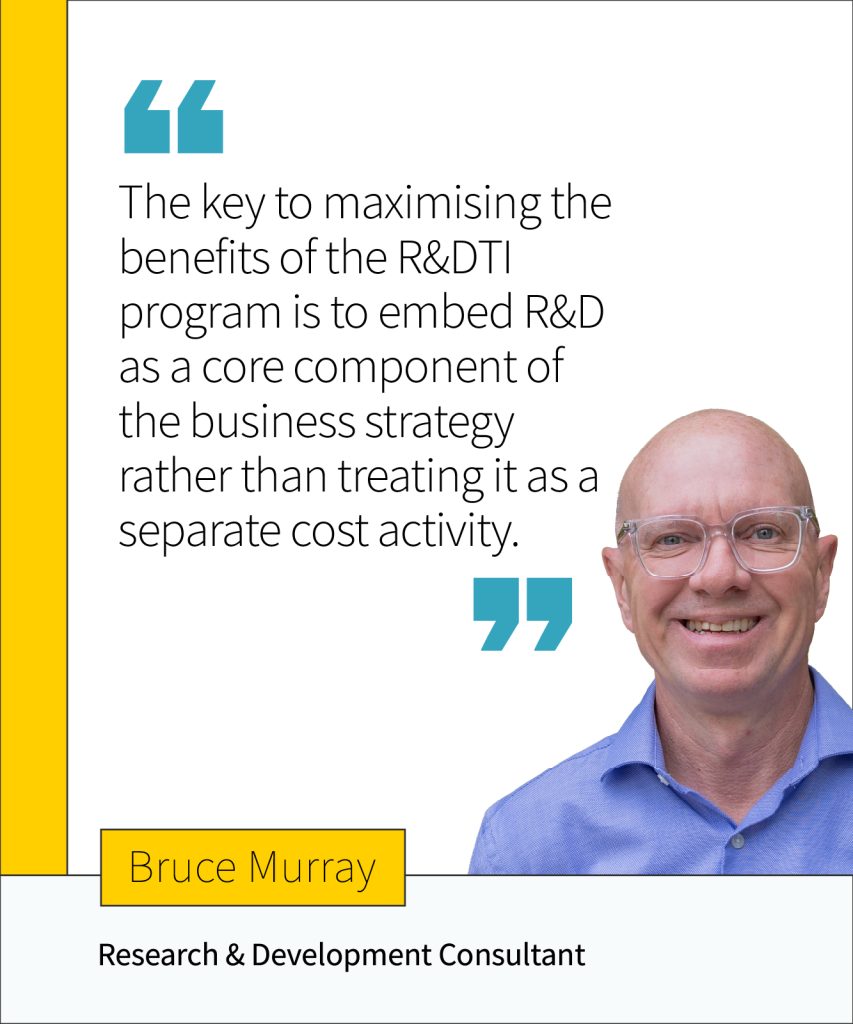
For example, a manufacturing company could use the R&DTI program to explore more efficient production techniques, reducing waste and improving sustainability — all of which may align with broader corporate goals. The key to maximising the benefits of the government program is to embed R&D as a core component of the business strategy rather than treating it as a separate cost activity.


Bruce Murray's key tip on the R&D Tax Incentive


3. Are there particular industries or sectors that you believe can benefit more significantly from the R&D Tax Incentive, and why?

Yes, while the R&DTI program is industry-agnostic and open to businesses of varying sizes and sectors, certain industries tend to benefit more due to the nature of their operations. Sectors such as pharmaceuticals, biotechnology, software development, renewable energy, agriculture, and advanced manufacturing often have innovation embedded in their core activities. For instance, the pharmaceutical and biotech industries are heavily involved in product development and clinical trials, which naturally align with R&DTI criteria. Similarly, software companies engaged in developing new technologies or platforms often qualify.


However, the program isn’t limited to high-tech fields — innovative practices in agriculture, construction, and food production can also qualify. From small startups and SMEs to significant major corporations, a range of businesses can be eligible for the program. It’s a matter of understanding and establishing eligibility.


4. What advice would you give to a company considering applying for the R&D Tax Incentive for the first time?

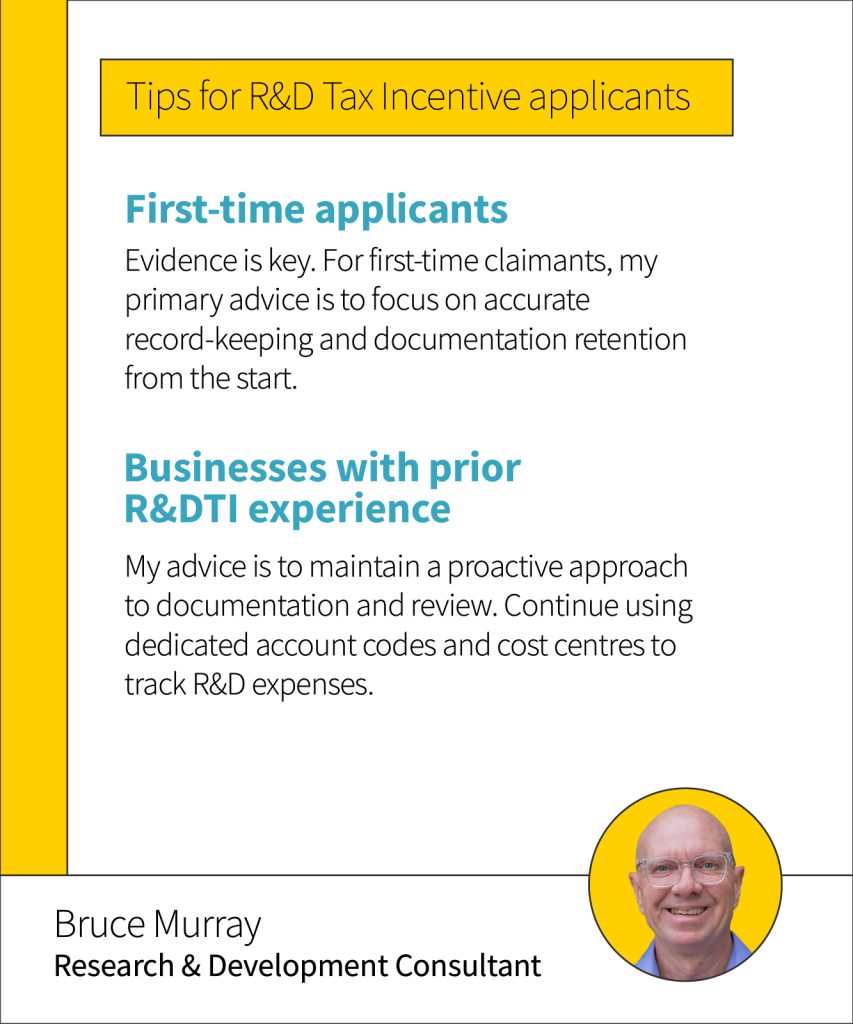
For first-time claimants, my primary advice is to focus on accurate record-keeping and documentation retention from the start. Capturing eligible R&D costs throughout the year can be challenging if not planned properly. Businesses may set up dedicated project codes or a unique cost centre in their accounting system to distinguish R&D expenses from general operational expenses.


Evidence is key. Maintaining detailed financial records — such as timesheets, depreciation schedules, and invoices — will make it significantly easier to compile the required documentation when finalising a claim. Clear and well organised proof of evidence are crucial to demonstrate compliance with the R&DTI program’s requirements and maximise the rebate.


Bruce Murray's top tips for first-time and repeat R&DTI applicants


5. For businesses already familiar with the program, how can they improve or optimise their claims?

For businesses with prior R&DTI experience, my advice is to maintain a proactive approach to documentation and review. Continue using dedicated account codes and cost centres to track R&D expenses. However, to further optimise claims, consider implementing periodic reviews throughout the financial year rather than waiting until year-end. This assists in allowing to identify any gaps in documentation early and ensures all eligible activities and expenses are captured. Additionally, staying informed about any regulatory updates to the R&DTI program is essential to maintain compliance and maximise claim value.


Maximise Your R&D Tax Incentive Claim. FundFindrs’ specialist consultants can help identify all eligible expenses and optimise your application.


6. How do you typically work with companies, and what role does collaboration play in ensuring a successful application?

When it comes to financials, close collaboration ensures that all eligible R&D costs are identified, documented, and factored into the application, minimising the risk of missing out on valuable rebates. We also emphasise the importance of maintaining thorough records and evidence throughout the year, making the claims process smoother and more effective due to our regular communication.


Keeping an open dialogue is paramount in the way the FundFindrs’ team collaborates with businesses. Our role goes beyond simply preparing the application — we focus on truly understanding our clients’ business and projects through open, transparent discussions. This collaborative approach allows us not only to build a compelling case that accurately reflects the innovative work being conducted but also allows us to give valuable advice on an ongoing basis. Further, the better we know our clients, the more we are able to assist with identifying additional grants and funding opportunities that are suitable to help drive growth.


Not sure if you’re eligible for the R&D Tax Incentive?
Our free Blueprint breaks it down with an eligibility checklist, examples, and expert tips from the FundFindrs team.


At FundFindrs, we’re dedicated to making the R&D Tax Incentive application straightforward and stress-free for businesses like yours. From identifying eligible R&D activities to accurately capturing costs and preparing fully compliant applications, we help you focus on what matters most —innovation — while we handle the complexities behind the scenes. If you’re considering an R&DTI claim or simply want to ensure you’re maximising your return, Bruce together with our expert team are here to guide you. Take advantage of our FREE initial consultation.

Key Grants for Food and Beverage Companies in Australia

Last reviewed: July 17, 2026


Government funding plays a fundamental role in driving growth, innovation, and operational improvements within Australia’s Food & Beverage sector. With a broad range of grants available, businesses can struggle to identify the opportunities that best align with their unique needs.


In this article, we outline several key grants selected specifically for Food & Beverage companies, covering initiatives from safety enhancements to strategic investment. Each program is designed to help businesses elevate their operations, expand their capabilities, and invest in critical infrastructure.


  1. Distillery Door Programs – Hazardous Areas and Dangerous Goods Rebate
  2. Wine Exports China Re-Engagement Support Program
  3. Value Add Investment Grants Program (VAIG) – Feasibility Stream


Key takeaways 


  • Government grants can help Food & Beverage businesses improve safety, expand operations and invest in growth initiatives.
  • Funding opportunities are available across multiple areas, including workplace safety, export market development and value-add manufacturing projects.
  • Many grants are highly targeted, with specific eligibility criteria based on industry, location and business activities.
  • Co-contributions are often required, meaning businesses should be prepared to invest alongside government funding.
  • Export-focused programs can support market expansion, helping businesses strengthen their presence in international markets.
  • Planning ahead is essential, as grant programs have different funding limits, application requirements and closing dates.


1. Distillery Door Program – Hazardous Areas and Dangerous Goods Rebate

Enhancing safety in Victoria’s distilleries with essential rebates


Key Details

  • Closing by: 30 June 2025
  • Funding Available: Up to $50,000
  • Target Recipients: Distillers of alcoholic beverages in Victoria


Overview

This program assists Victorian distillers in investing in essential equipment and infrastructure to enhance safety in their facilities. It offers a rebate on eligible expenditure — up to 70% or 80% (GST exclusive), capped at $50,000 — while requiring a cash co-contribution of 20% or 30% depending on production volumes.


As part of a $20 million initiative to support Victoria’s distillery industry, the program funds activities such as hazardous area assessments, equipment installation, and specialist training, ensuring that all upgrades comply with Australian Standards and regulatory requirements.


Eligibility Criteria

Businesses must:

  • Hold a current Australian Business Number (ABN) and be registered as a legal entity in Victoria.
  • Own at least one still with a capacity of 50 litres or more.
  • Possess a valid ATO Manufacturer’s Licence and a current Victorian General or Producer’s Liquor Licence.
  • Have completed a hazardous area assessment, dangerous goods audit, OHS Essentials Program, or equivalent assessment undertaken from 1 April 2023 until closing date.
  • Meet the required cash co-contribution based on their production level.
  • Agree to participate in future program evaluation activities and comply with relevant workplace and employment obligations.


2. Wine Exporters China Re-Engagement Support Program

Supporting SA wine exporters to re-access China’s market


Key Details

  • Closing by: Program runs until June 2026
  • Funding Available: Approximately $1.9 million total funding pool
  • Target Recipients: South Australian wine exporters


Overview

This program is designed to help South Australian wine exporters re-enter the Chinese market following the lifting of tariffs on Australian wine. It delivers strategic support through market insights, export advisory services, coordinated trade missions, and targeted marketing campaigns.


Implemented by the South Australian Government in partnership with the South Australian Wine Industry Association (SAWIA), the program aims to revitalise international trade relationships and strengthen the region’s wine sector.


Eligibility Criteria

Businesses must:

  • Be a registered South Australian wine exporters with a valid ABN.
  • Demonstrate active engagement in exporting wine internationally.


3. Value Add Investment Grants Program (VAIG) – Feasibility Stream

Empowering WA food and beverage businesses with feasibility funding


Key Details

  • Closing by: 30 June 2025
  • Funding Available: Individual grants from $15,000 to $100,000 (up to $500,000 per project; total pool of $6 million)
  • Target Recipients: Agriculture, food, and beverage businesses in Western Australia


Overview

The VAIG – Feasibility Stream supports WA-based agriculture, food, and beverage businesses planning to expand, diversify, or relocate their value-add processing operations. This program funds planning and feasibility studies that underpin investments in new manufacturing capabilities, technology upgrades, or plant modernisation. By reducing WA’s reliance on imported products, the initiative fosters innovation, enhances sustainability, and drives job creation. Applicants are required to provide a minimum cash co-contribution of 30%, with some flexibility available for Aboriginal businesses.


Eligibility Criteria

Businesses must:

  • Be a private sector entity (including incorporated trustees, public companies, or cooperatives) with a valid ABN and GST registration.
  • Plan a project located in or relocating to Western Australia.
  • Demonstrate the financial capacity to meet the minimum cash co-contribution.
  • Have been in operation for at least 12 months (or possess a similar established track record).
  • Be capable of entering into a legally binding agreement with the WA Government.
  • Regional and Aboriginal businesses are encouraged to apply.


Reminder: Don’t Miss the R&D Tax Incentive (R&DTI)


The Research and Development Tax Incentive is a powerful mechanism that offers significant tax offsets and cash refunds for eligible R&D activities, easing the financial risks of innovation. Despite its benefits, many Food & Beverage companies are overlooking this opportunity. Leveraging the R&D Tax Incentive not only reduces R&D costs but also positions your business to drive technological advancements and compete globally.


Ensure you assess your eligibility and consider expert advice to fully integrate this incentive into your financial strategy for sustained growth and market leadership. Learn more about the R&DTI Program by visiting our dedicated page.


Food and Beverage Funding Opportunities for Australian Businesses


The grants listed above represent just a snapshot of the funding opportunities available to support the growth and innovation of Food and Beverage companies in Australia. If you’re looking to explore these options further and strengthen your market position, our team of experts is here to help.


With the complexities of the application process, partnering with experienced advisors is essential. That’s where FundFindrs comes in — we support you every step of the way. Book a FREE chat today for a tailored consultation.


EOFY Australia 2026: Business preparation checklist for tax time success

13 essential steps to streamline EOFY and prepare your R&D Tax Incentive (R&DTI) claim


Last reviewed: July 17, 2026


The end of the financial year (EOFY) in Australia falls on 30 June, and for businesses, now is the time to act. Rather than treating it purely as a compliance deadline, use it as your prime opportunity to organise your finances, reduce your tax burden, and plan strategically for the year ahead. 


And why not prepare your R&D Tax Incentive (R&DTI) documentation at the same time? 


In this guide we focus on what matters most for your business this EOFY: key dates, understanding tax return types, and deploying effective strategies to maximise deductions and ensure a successful tax time. And for maximum efficiency, get your documentation ready for upcoming R&DTI claim.


  1. Key EOFY related deadlines
  2. Business Activity Statements (BAS)
  3. Taxable Payments Annual Report (TPAR)
  4. The End of Financial Year checklist: Your business action plan (13 steps)
  5. For greater efficiency combine EOFY and R&DTI
  6. Common EOFY tax mistakes to avoid
  7. EOFY preparation — the foundation of funding success


Key takeaways 


  • EOFY is more than a compliance exercise. It is an opportunity to organise finances, optimise tax outcomes and prepare for the year ahead.
  • Understanding key lodgement deadlines is essential, including obligations for tax returns, BAS and TPAR reporting.
  • Preparing EOFY records early reduces errors, improves efficiency and helps avoid last-minute stress.
  • EOFY preparation and R&D Tax Incentive planning can be done together, helping businesses streamline documentation and reporting requirements.
  • Good record-keeping supports stronger tax and funding outcomes, making it easier to substantiate deductions and future claims.
  • Avoiding common EOFY mistakes can save time and reduce compliance risk, particularly when managing tax obligations and supporting documentation.


Key EOFY related deadlines

Knowing your key lodgement dates will help you stay organised during tax time. There are various deadlines to pay attention to, depending on your circumstances. According to the Australian Taxation Office (ATO), the deadlines are:


For individuals — 31st October

For businesses — 28th February


And there are the crucial deadlines for Business Activity Statements (BAS) and Taxable Payments Annual Report (TPAR) around the end of the financial year.


Business Activity Statements (BAS)

Your BAS reporting frequency (monthly, quarterly, or annually) determines your specific due dates.

  • Monthly lodgers: Your June BAS is due by 21 July. (Note: The December monthly BAS often has an extended deadline of 21 February for eligible businesses lodging electronically via an agent).
  • Quarterly lodgers (Standard): The standard deadline for the Quarter 4 BAS (covering April, May, June) is 28 July. Other standard quarterly dates are 28 October (Q1), 28 February (Q2), and 28 April (Q3).
  • Quarterly lodgers (via Agent): If lodging through a registered Tax or BAS agent, you typically benefit from extended deadlines under the lodgement program (except for Quarter 2). For the crucial Quarter 4 (ending 30 June), this generally pushes the deadline out to 25 August. Always confirm your specific date via the ATO portal or with your agent.


Taxable Payments Annual Report (TPAR)

If your business pays contractors for services in industries like building and construction, cleaning, courier services, road freight, IT services, or security, investigation, or surveillance services, you must lodge a TPAR.

  • TPAR deadline: This report, covering payments made during the 1 July to 30 June financial year, must be lodged with the ATO by 28 August each year.


The End of Financial Year checklist: Your business action plan

The EOFY requires thorough financial housekeeping, compliance adherence, and planning. Successfully navigating this period ensures accuracy in your reporting, helps you meet your obligations, and positions your business for future success.


To guide you through the essential activities — from year-round record-keeping and embracing technology to specific tasks like finalising accounts, managing tax obligations, and reviewing your overall business strategy — here is our comprehensive checklist to help you through a smooth and productive EOFY process.


Step 1 | Gather and organise your documents throughout the year

The first step to getting organised for tax time success is gather all your important paperwork, like receipts, invoices, bank statements, and any other relevant documents throughout the year. Having everything in order saves time and by doing this you can easily categorise them at the end of each financial year.


Step 2 | Embrace technology

Managing your documents is not always easy, so take advantage of accounting software or record-keeping apps to simplify the process. These tools can help you with expenses, generate reports and connect you directly to your tax accountant. This can simplify record-keeping throughout the year and result in a smoother EOFY process for you.


Step 3 | Consult a tax accountant

Do you need to consult a tax accountant?

Tax matters can be complex or overwhelming, so it could be worth consulting a tax accountant and seeking advice. A qualified tax professional can provide expert guidance and determine the best approach for filing combined returns. They will ensure compliance with tax laws, help you navigate deadlines, and maximise deductions across your business and personal finances.


Step 4 | Prepay expenses

Paying for expenses that can qualify for a tax deduction before June 30 will boost your tax refund. These costs might come from work-related expenses or donations to charities. Check out the ATO guidelines to see what work-related costs you can claim.


Step 5 | Write off bad debts

Can you write off bad debts before 30 June? 

You can deduct bad debts from your taxes if you don’t think you’ll be able to pay them back. You need to have proof of your claim and have made a sincere effort to collect the debt to be eligible for a bad debt deduction. Reducing your taxable income can be achieved by writing off bad debts before the end of the financial year. This can be helpful when filing your tax return lodgement. Speak to your accountant to see if this is the right option for you.


Step 6 | Bank reconciliation

Bank accounts, debtors, asset registry, and other assets, like payroll-related income in advance, leases, and other liabilities, can be addressed in reconciliations. Make sure your bank statements and bookkeeping records match. Plan to avoid delays and meet end of financial year deadlines.


Step 7 | Review assets and asset depreciation

Examine your asset register and make any necessary updates, including asset sales or purchases, during the financial year. Analyse and precisely record the depreciation costs for every asset.


Step 8 | Review business expenses

Examine your business expenses to make sure they are justified and accompanied by the necessary records. Determine whatever tax write-offs or deductions might be available for the current fiscal year.


Step 9 | Complete and lodge Business Activity Statements (BAS)

Prepare and submit your BAS, outlining all transactions related to GST for the fiscal year. Make certain that every statistic is true and backed up by the necessary records.


Step 10 | Manage superannuation obligations 

Are your superannuation obligations up to date? 

Tax time can be a good opportunity to review your superannuation requirements for the new financial year. As a business, it is your legal obligation to pay superannuation guarantee (SG) payments to eligible employees. Ensure timely payments and maintain accurate records to avoid penalties from the ATO. For every eligible employee, you are required to pay at least 12% of their ordinary time earnings (OTE) as the SG rate. Consider consulting with a financial advisor to optimise your superannuation strategy, ensuring compliance and maximising benefits for both your business and your employees.


Step 11 | Maintain accurate payroll records

Keeping correct and accurate payroll records comes next on the EOFY checklist. Employers are required to utilise Single Touch Payroll (STP) to automatically transmit payroll tax information to the ATO for reporting purposes.


Step 12 | Taxable Payments Annual Report (TPAR)

The Taxable Payments Annual Report (TPAR) is a key ATO reporting requirement for many businesses that make payments to contractors or subcontractors. The industries that must file a TPAR through the Taxable Payments Reporting System (TPRS) have been added to the government’s list. Currently that list includes building and construction, government grant providers, IT services, and security services.


Step 13 | Analyse your business structure 

Is your current business structure still right for you? 

Is your current business structure (sole trader, partnership, or company) still the best option for you? Take into consideration liability protection, expansion objectives, and tax consequences when determining your business structure. Seek advice from an expert in taxes about how to organise your company to minimise taxes may be advantageous.


For greater efficiency combine EOFY and R&DTI

Consider combining the preparation of your EOFY and Research and Development Tax Incentive (R&DTI) documents for ultimate efficiency.


While you are already deep in reviewing financial records, assessing project costs, and finalising accounts as part of EOFY activities, why not consider including the preparation for your Research and Development Tax Incentive (R&DTI) claim?


Rather than seeing your R&DTI claim as a separate, later task, consider integrating it with your EOFY processes. Much of the detailed financial data required for R&DTI claims like payroll costs for R&D staff, specific project expenditures, and overhead allocation is already being gathered for your tax return and financial statements. By identifying and collating R&D specific information at the same time, you can significantly streamline workflows, reduce duplication of effort, and save valuable time and transform compliance from two separate burdens into one more efficient process.


To qualify for the R&D Tax Incentive, your business generally needs to meet the following conditions: 


  • Entity type: must be an incorporated company (sole traders and partnerships are not eligible) 
  • Minimum spend: at least $20,000 in eligible R&D expenditure for the income year, unless you use a registered Research Service Provider 
  • Activity type: activities must involve genuine experimental work aimed at generating new knowledge, not just routine development or quality testing 
  • Registration: R&D activities must be registered with AusIndustry within 10 months of your income year ending (i.e. by 30 April for a 30 June year-end) 


FundFindrs can provide expert guidance for your R&DTI. Book an appointment today.


Common EOFY tax mistakes to avoid

Here are the four most common mistakes you should avoid when it comes to EOFY.

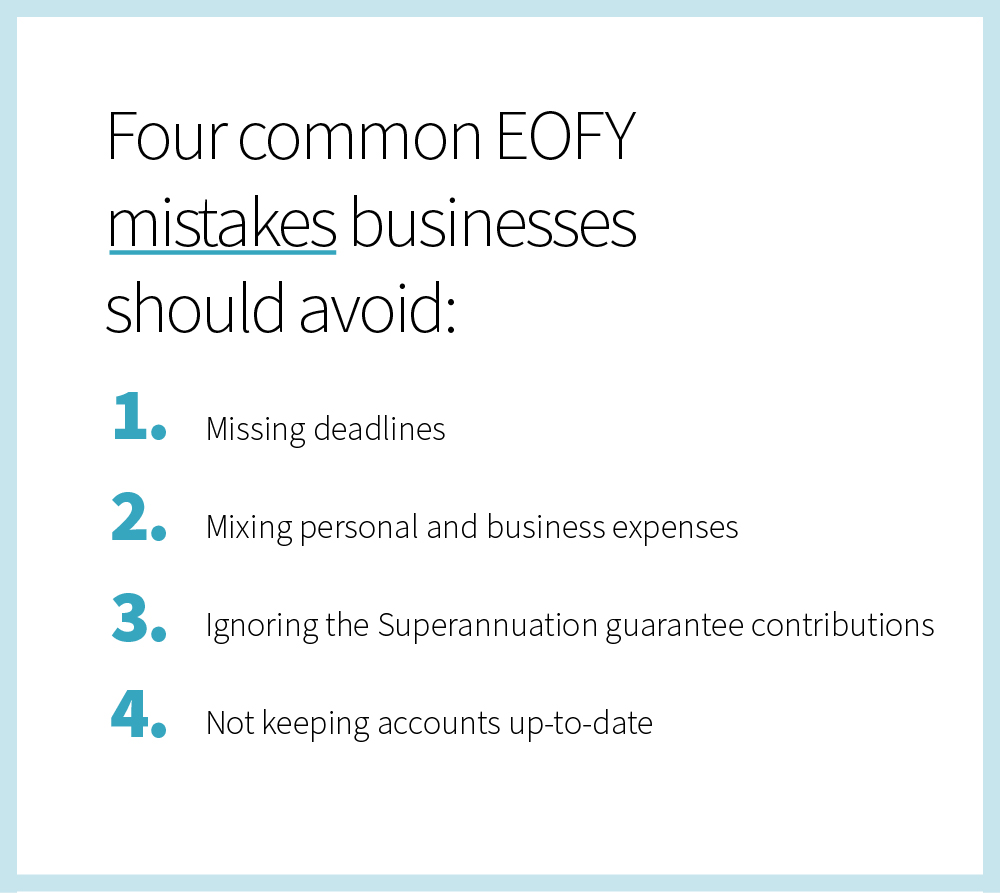
  • Missing deadlines: Failing to meet crucial tax deadlines for lodgements or payments can result in penalties and interest charges directly from the ATO.
  • Mixing personal and business expenses: Mixing personal and business finances makes it difficult to report taxes accurately and can result in disallowed claims or trigger an audit from the ATO.
  • Ignoring Superannuation Guarantee contributions: Not meeting your Superannuation Guarantee (SG) obligations, including paying the correct amounts by the deadline, can lead to substantial penalties like the Superannuation Guarantee Charge (SGC) from the ATO.
  • Not keeping accounts up-to-date: Failing to keep accounting records current makes EOFY preparation difficult and increases the risk of inaccurate reporting, potentially leading to errors or compliance problems with the ATO.


Four Common EOFY mistakes


EOFY preparation — the foundation of funding success

EOFY isn’t just about closing the books; it’s the launchpad for smarter planning and accessing vital funding through grants and the R&D Tax Incentive. Strong EOFY records are essential for this, and although FundFindrs aren’t tax agents, we specialise in helping you leverage that financial data for successful funding applications. Connect with FundFindrs today to discuss maximising grants and R&DTI opportunities for your business. Book a FREE consultation today.

5 Benefits of Lodging Your R&DTI Claim Right Now


Last reviewed: July 17, 2026


Every year, thousands of Australian businesses benefit from the R&D Tax Incentive (R&DTI) — a government program offering up to 43.5% in tax offsets for eligible research and development activities. But many wait until the last minute to lodge their claim, which can slow cashflow, increase stress, and complicate tax lodgements.  

Whether you’ve claimed before or are exploring the R&DTI for the first time, FundFindrs is here to support you through the process, making it straightforward, simple and rewarding.

Early lodgement is the smart move and here are five reasons why.


  1. Access cash sooner  
  2. It’s easier to recall recent work
  3. Make all your lodgements seamless
  4. Avoid the seasonal bottlenecks 
  5. It gives you time to focus on your business
  6. FundFindrs makes it easy for everyone 


Key takeaways 


  • Early lodgement can improve cashflow, helping businesses access their R&D Tax Incentive refund sooner.
  • Claiming while activities are still recent makes it easier to capture accurate project details and supporting evidence.
  • Getting started early reduces administrative burden, helping avoid amendments and last-minute tax return adjustments.
  • Avoid seasonal bottlenecks caused by holiday periods and peak R&D Tax Incentive lodgement volumes.
  • Earlier access to funding may be possible through specialist lending solutions linked to expected R&D Tax Incentive refunds.
  • Taking action sooner provides greater certainty, allowing business owners to focus on growth rather than compliance deadlines.


1. Access cash sooner  

The sooner you lodge, the sooner you access your refund. That’s real money you can reinvest into your business, whether it’s hiring staff, launching a new product, or strengthening your financial position. For businesses new to the R&DTI, this can be a powerful funding boost to fuel innovation and growth. 


2. It’s easier to recall recent work

Your R&D activities for FY25 took place between 1 July 2024 and 30 June 2025. If you wait until the April 2026 deadline, that means you’ll be looking back nearly two years. Preparing now means the details are fresh, making it easier to gather accurate information and reducing the risk of missed or incomplete documentation. 


3. Make all your lodgements seamless

Your R&DTI Schedule and Company Tax Return (CTR) are separate but closely linked. Preparing your R&DTI claim early helps you or your accountant lodge your CTR with the correct R&D figures from the start. That means fewer amendments, less rework, and a smoother process for everyone involved. Even if you aren’t ready to submit your CTR yet, there are options available so you can still get the funding now.

We have partners who offer R&D loans, which are advances on your R&DTI refund, meaning you don’t have to wait until after you lodge your company tax return; you can access your refund and reinvest earlier. 


Looking for faster access to your R&D refund?

We work with specialist partners who can help you unlock your funds early


4. Avoid the seasonal bottlenecks 

There are two busy periods which can slow things down:

  • December/January means summertime, when some of your key staff may be on leave. 
  • March/April is when AusIndustry experiences peak R&DTI claim volumes because people didn’t get their claims in sooner.


5. It gives you time to focus on your business

Submitting your claim early gives you peace of mind, freeing up headspace to focus on your business. Instead of scrambling at the last minute, you’ll have confidence knowing your R&DTI refund is on its way — freeing up time and energy to focus on this year’s growth. 


Research and Development in the manufacturing sector.


6. FundFindrs makes it easy for everyone 

Whether you’ve claimed the R&DTI in the past, or you’re applying for the first time, FundFindrs supports you every step of the way to simplify what can often feel complex.

Our specialists work with you throughout the year to:  

  1. Identify and define eligible R&D activities with precision and clarity.  
  2. Strengthen documentation and evidence to support compliance.  
  3. Review previous claims for missed or under-claimed opportunities.  
  4. Provide guidance on structuring future projects for long-term benefit.  

This proactive, year-round partnership ensures your R&D claims are accurate, defensible, and optimised for value.


Let’s get your R&DTI started now 

 If you’re ready to get your refund sooner and make next year’s claim easier, our team can help you start today. Click here to book a FREE consultation.